Over the years, there has been a phenomenal growth in the number of PHP users. The programming language discovered more than two decades ago is hugely popular. Many developers expressed their concern that it might suffer a setback owing to the rising popularity of other languages, but this did not happen.
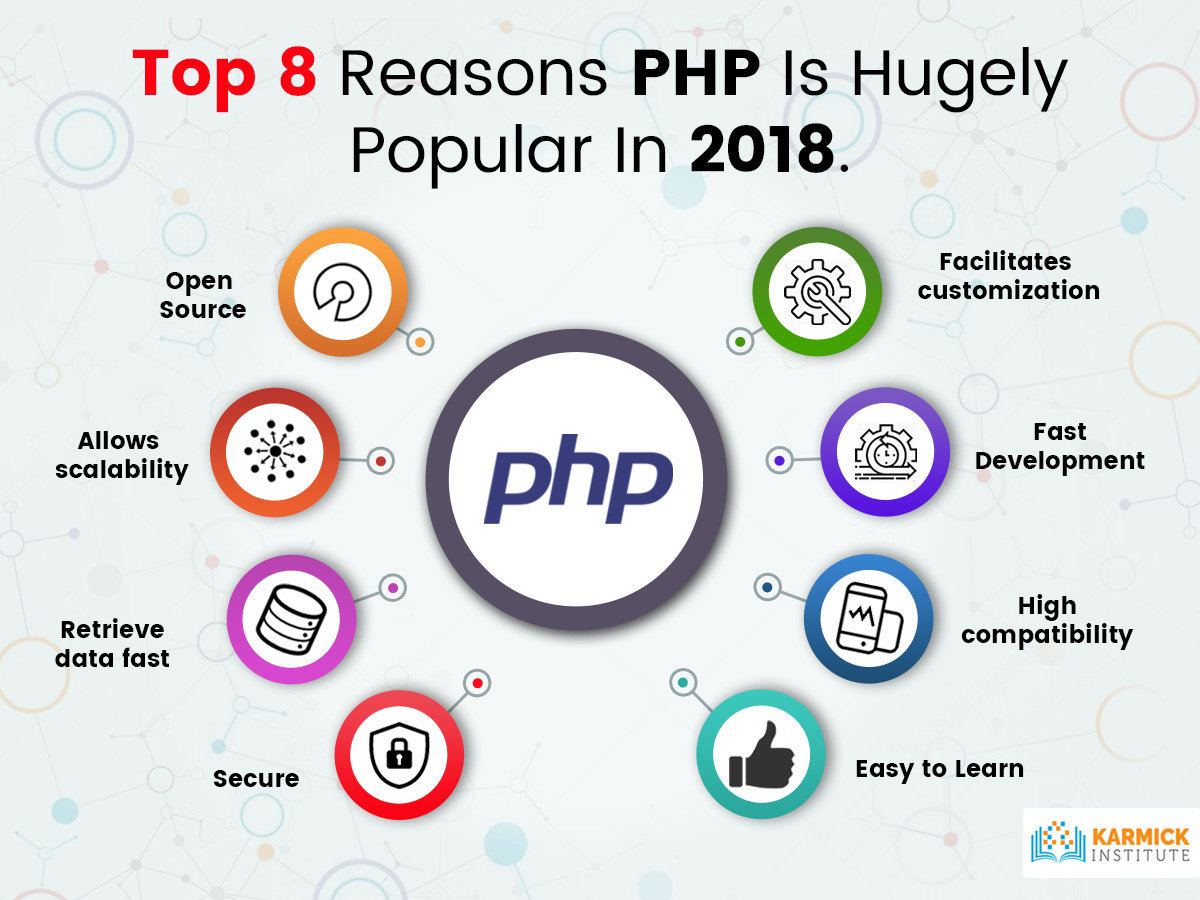
Check out the websites that are built using PHP, and the reasons will become apparent. Some of the websites powered by PHP are Facebook, Yahoo, Flickr, iStockPhoto, and MailChimp. However, for the sake of convenience, here we are listing the top 8 reasons. So, let’s have a look.
Open Source
PHP is a general-purpose programming language used by millions of developers for its stunning features and budget-friendliness. The fact that it is an open-source programming language makes it easier for developers to improve upon an existing code without making any payment. Also, its open-source nature helps developers across the world to develop beautiful and fully functional websites that could benefit the public without thinking about the financial aspect. Moreover, there are upgrades to fix bugs and add more features which makes it all the more appealing to developers.
Allows Scalability
When a developer chooses a programming language, a question that continuously hovers in mind is whether the website will be able to handle increased web traffic in near future or not. PHP allows the same by letting developers add more servers to handle more traffic. The fact that a dynamic website like Facebook is built by using PHP speaks volumes about the scalability it offers.
Retrieve Data Fast
One of the most important advantages because of which PHP is going strong in spite of tough competition from other programming languages is its ability to retrieve data at a terrific speed. It is also easy to get useful tips from the ever-growing community of PHP programmers that eventually helps PHP website developers to increase the website speed in multiple ways.
Facilitates Customization
It is possible to customize a website developed in PHP to a considerable extent. Developers can not only change the look of their website but can also tweak it to meet the specific requirements of their customers with ease. As most content management systems like Joomla, WordPress, and more are PHP based, it is relatively easy to create a customizable PHP website.
High Compatibility
One can run PHP code on diverse platforms such as Windows, Linux, Mac, and Unix. Also, the scripting language is compatible with most local servers such as Apache, IIS, and more. It is thus ideal for cross-platform development.
Is Secure
PHP is used by big companies and government institutions alike which is a testimonial that it is a secure language. Also, the firm standing of the vast PHP community to identify and rectify the vulnerabilities on an ongoing basis plays a vital role in ensuring that it remains secure.
Fast Development
A website or app developed in PHP utilizes its own memory space. This aids in faster processing and subsequently rapid development of web apps and websites. The server workload and the load time of a site are reduced automatically in PHP.
Easy to Learn
In PHP, the learning curve is not steep like in the case of other programming languages such as Java, C++, and so on. There is no shortage of online resources( tutorials, videos, and more) that can help a beginner to understand and learn the nuances of the language quickly.
Lastly, it is imperative to choose a programming language that offers convenience and has an impressive list of advantages. PHP scores high in both.
Mobile apps have changed our way of life in so many ways. You can get food and parcels delivered to your doorstep, have cabs pick you up from your location and video call with someone across the globe. All of this is possible using a variety of mobile apps. In the era of digitisation and Covid-19 we are living in,
Mobile app development has been on the rise
.
The two main operating systems on which smartphones these days run are Android and iOS. The latter is only exclusive to phones made by Apple while every other smartphone brand in the market uses Android. So clearly Android dominates the market share and its Play Store is home to a whopping 2.87 million apps as against only 1.96 million apps in Apple’s iOS App Store.
This is why a career in Android app development seems so lucrative and is very much in demand in the global economy. Are you also wondering about the technical skills required to become a successful Android app developer? Let us take a look.
Expertise In Programming Languages- Java & Kotlin
The first and foremost thing a developer should learn in any field is the required programming language or languages. In the case of Android app development, the two most preferred programming languages are Java and Kotlin. You can use either one to create an app or even both simultaneously. It is important to always remain up to date regarding the latest versions and programming structures of these languages along with a sound understanding of the syntax. It will help you to save time and make minimal mistakes when coding.
Proficiency In XML
Just like the markup language HTML is used in case of creating website layouts, XML (Extensible Markup Language) is used for the same purpose when building Android apps. If you are already familiar with HTML then it is a bonus for you because XML is quite similar to it. XML allows information to be passed between various devices in a consistent manner. Since it allows seamless flow of data to web services and vice versa in Android apps, a basic knowledge of XML is a must-have skill.
Understanding Android SDK
Have you ever noticed that when you are scrolling through a news app, at the end of every article, there is automatically the option to share it via WhatsApp, Facebook and Instagram? This integration is possible through a tool known as Android Software Development Kit (SDK). It provides a set of prewritten codes that allows apps to use features such as camera, gyroscope, compass, sharing and much more. The most important component of Android SDK is a library called Gradle. Instead of writing fresh code every time, you can simply download the SDK.
Database Management
As an Android app developer, you will have to deal with data at some point in time whether it is the data of the app itself or user data. When dealing with large amounts of data, it is not possible to keep it stored on your smartphone at all times. Instead, your app has to interact with a cloud service database provider such as Firebase or Parse. It also helps to sync data between cloud and the local storage on the smartphone. Another popular option includes storing the data locally using Android’s built-in support for SQL to interact with a SQLite database. It is a good idea to learn SQL database management system to increase your chances of getting hired.
Familiarity With Android Studio
Android developer’s choice of IDE (Integrated Development Studio) is known as Android Studio. Familiarity with Android Studio will help you work more efficiently as a developer since you can use its built in debugger and testing tools to write code that is free of any bugs. It is built on the well known JetBrains’ IntelliJ IDE and is specially designed to suit the needs of Android app developers. It has built in support for most of the common Android SDKs. It is a must have tool for both beginners and experts that ensures high performance of Android apps on all kinds of mobile devices.
Importance Of Android UI/UX
A basic understanding of UI/UX is very important for an Android app developer in 2020. Users these days demand a good interface no matter how good the functionalities of the app are. If it is not up to the modern standards of UI guidelines, the app would most likely not do well. For example, developers should make sure that the app will present a different layout optimised according to the screen size of a smartphone and a tablet. In order to keep this trend up, Google has also introduced Material Design for Android, that helps to improve the overall UI/UX by implementing features such as transitions, graphics.
API (Application Programming Interface)
You might want your Android app to be able to interact with a host of other services such as a third party calendar, music player, photo editor and much more. It is not a very uncommon thing for Android apps to do this. In order to safely and securely allow your app to use APIs, you need to be familiar with it. They make your app much more interactive and widens audience reach too. So, it is a good idea to explore different APIs and find the best ones for your app.
Apart from these technical skills, you can also dabble in Git version control systems, effectively test apps before launching them and ensure that they do not compromise on security. There are also some non-technical skills such as being adaptable to different things, having good research and communication skills that will help you in your journey to become a successful Android app developer. It is time to get enrolled in an Android app development course from a reputed training center now!
The Information Technology world is always evolving. There is no guarantee that a particular skill set will land you a good job year after year. Employers put in a lot of effort in recruitment so that they can hire candidates who possess the latest, most trending skills. So, what are some modern and demanding tech skills that will help your CV stand out? Read the blog till the end to find out!
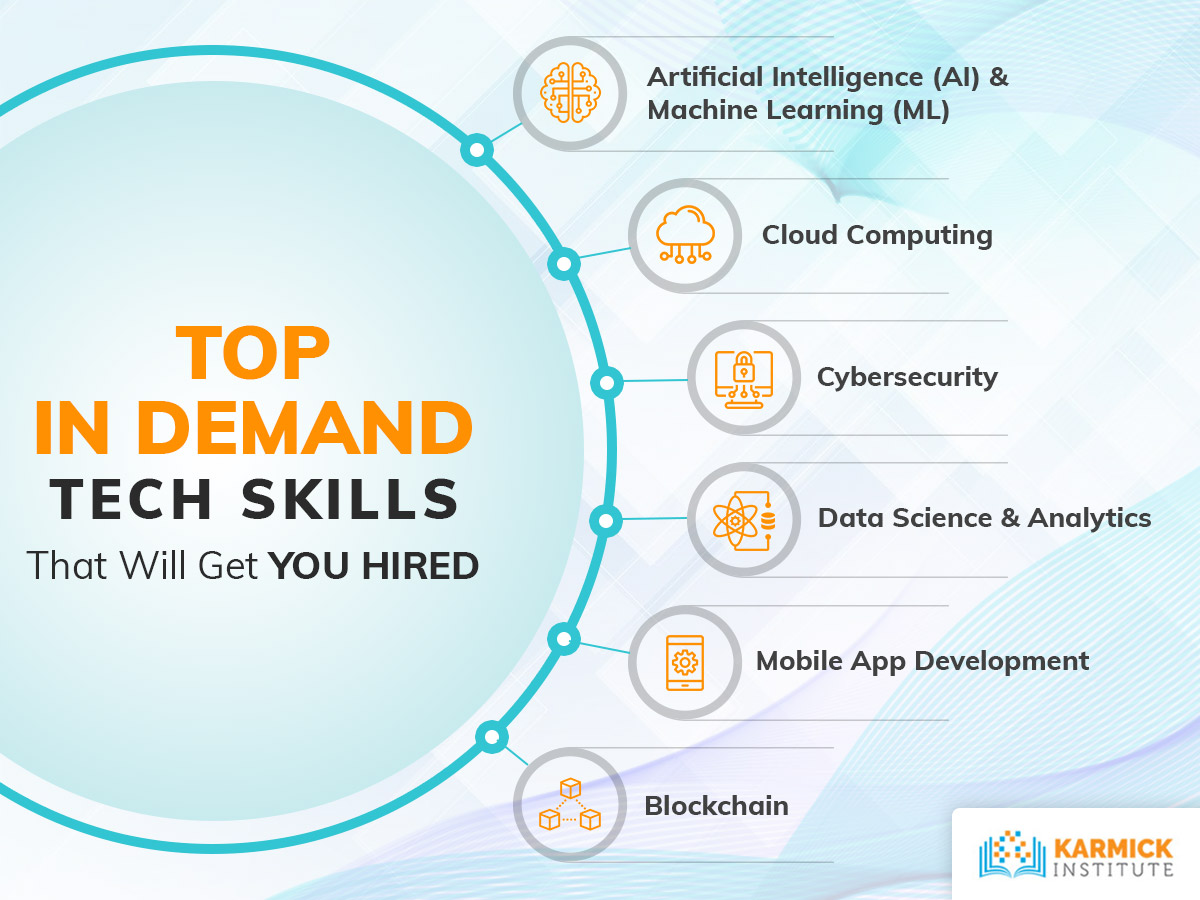
Artificial Intelligence (AI) & Machine Learning (ML): Although AI & ML are different, more often than not, they are used together. Over the years they have completely revolutionised the way humans interact with technology. Starting from chat box on websites to voice assistants such as Alexa and Siri, the possibilities are endless. The latest one being the self-driven cars by Tesla. To learn AI & ML, you will need good knowledge of programming languages like Java and Python. There are job prospects in every sector ranging from healthcare to finance.
Cloud Computing: Cloud Computing has become prominent in recent years as more and more companies are migrating to cloud solutions from traditional server infrastructure. The two leading cloud service providers currently are Amazon Web Services (AWS) and Microsoft Azure, especially the former. AWS also has additional features to offers such as content delivery, database storage and networking. All in all, learning AWS is one of the most profitable IT skills out there right now.
Cybersecurity: Cybersecurity is one thing that even the global giants of this world struggle with. Protecting sensitive data easily tops the priority list of all organizations, private and public alike. As said earlier, due to the increase in cloud solutions recently, cybersecurity is more important than ever. Yet there still remains a gap to be filled and companies are not shy when it comes to paying their cybersecurity experts.
Data Science & Analytics: Once again a duo in the same point, data science and data analytics go hand-in-hand. It involves analyzing data from multiple angles using intricate formulae and algorithms. The main purpose is to make more accurate predictions for future prospects. There will be high demand for data scientists to judge the impact of the pandemic on their business.
Mobile App Development: With 3.5 billion smartphones users all over the world, this number is only going to increase exponentially. Companies have realised that in order to have a wider reach, having websites is not enough. Even SMBs are on the lookout for mobile app developers who can make custom mobile applications for their business needs. It is no secret that we use our smartphones a lot, jumping from one app to another.
Blockchain: Originally made for the cryptocurrency Bitcoin, blockchain has evolved a lot since then. There’s much more to this technology such as peer-to-peer payments, crowd funding and digital voting. With these gaining popularity, more companies are on the lookout for developers who understand blockchain and can leverage this technology.
Apart from these in demand tech skills that will get you hired, some other IT courses that are worth enrolling in are IoT, full stack development and UI/UX Design. A bright and exciting IT career awaits everyone who acquires any of the above skills.
Today, Mandira is beaming with joy! She has passed her graduation with flying colours. After all, graduation is a milestone for every student. So, the next step for Mandira will be to enrol herself in a B.Ed, M.A., or M.B.A. course like the majority of other art graduates, but she has other plans.
She is not interested in further studies. She wants to contribute to the household income as soon as possible. Thus, joining a regular course of 1-2 years duration is just out of the question. Are there any job-oriented courses for her that she can complete within 3-5 months?
Let’s discover the top short-term job-oriented courses that one can do after B. A. (Arts).
First, let’s understand why taking up short-term professional courses, especially after graduation courses in arts, is beneficial for any career.
Why Choose a Short-Term, Job-Oriented Course?
Opting best course after graduation in arts is a strategic move for several reasons, including:
Rapid Skill Acquisition & Quick Career Launch
Short-term, job-oriented courses are designed to equip learners with specific skills quickly. Unlike longer programs, you can acquire necessary and in-demand skills in a short period, a few weeks to months. Short courses after BA enable learners to quickly transition into the workforce and accelerate their earning potential.
Low Cost & Less Time Commitment
Short-term professional courses after graduation in Arts not only have lower tuition fees but also require less time commitment to acquire a specific skill. This makes Short-term, job-oriented courses a more accessible and financially viable choice for graduates seeking to start their career within a specific budget and period.
Career Change or Upskill
Whether you are looking to upskill or career transition with minimal disruption to your daily routine, a short-term course after graduation is the right choice. Without a substantial education debt or investing years off work, you can gain expertise in a specific field or solidify your knowledge in your current industry easily.
Hands-on Training
Short-term job-oriented courses are often designed to equip learners with hands-on, practical training and real-world applications. These practical-focused courses after BA help you gain the practical skills required to perform various tasks effectively in the job. Short-term 6-month courses after graduation can significantly boost your career and make you job-ready quickly.
Exposure to Current Job Market Demands
Short-term courses after graduation in Arts curriculum are aligned with the current industry standards. This means through short-term job-oriented courses, you can gain industry-relevant skills that employers actively seek, making you a valuable candidate and boosting your employability.
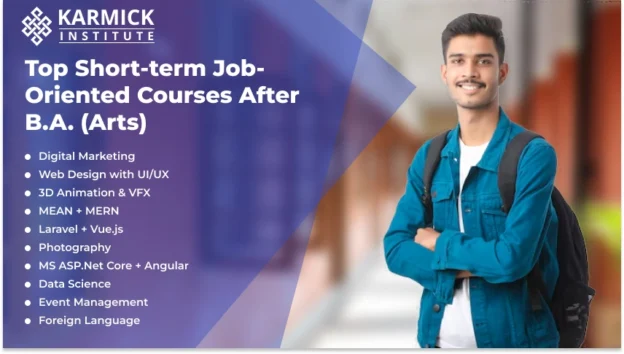
Top Short-term Courses After Graduation in Arts
Top Short-term Courses
Course Fee Range
Key Areas Covered
Digital Marketing
₹10,000 to ₹80,000
SEM (search engine marketing)
SEO (search engine optimisation)
SMM (social media marketing)
PPC (pay-per-click)
Content marketing
Email marketing
Website analytics
Marketing automation
Affiliate marketing
Web Design with UI/UX
₹20,000 to ₹50,000
Web design fundamentals
UI (user interface) design
UX (user experience) design
Integration & workflow
3D Animation & VFX
₹50,000 to ₹80,000
Fundamental concepts.
3D modeling & texturing
Rigging & animation
Visual effects
Lighting & rendering
Production & workflow
Post-production & editing
MEAN + MERN
₹25,000 to ₹1,80,000
JavaScript essentials
Node.js basics
Express.js framework
MongoDB fundamentals
RESTful API design
Version control (Git)
MEAN stack specifics
MERN stack specifics
PHP – Laravel + Vue.js
₹20,000 to ₹50,000
Laravel fundamentals
Eloquent ORM
Authentication & authorisation
API development
Basic security
Vue.js fundamentals
Component communication
Handling user input
Routing
Making API calls
API integration
Photography
₹10,000 to ₹1,00,000
Camera basics & settings
Lenses & focal length
Composition techniques
Light & exposure
Focus & depth of field
Editing software
Different photography genres
MS ASP.Net Core + Angular
₹20,000 to ₹50,000
ASP.NET Core fundamentals
EF core (Entity Framework Core)
Angular fundamentals
TypeScript essentials
API integration (ASP.NET Core & Angular)
State management & deployment
Data Science
₹50,000 to ₹1,50,000
Data wrangling
EDA (Exploratory Data Analysis)
Statistical foundations
Machine learning fundamentals
Programming for data science
Data visualisation & communication
Event Management
₹20,000 to ₹1,00,000
Event planning & conceptualisation
Logistics & operations
Marketing & promotion
On-site management & execution
Risk management & safety
Post-event evaluation & analysis
Foreign Language
₹50,000 to ₹1,50,000
Basic vocabulary & phrases
Fundamental grammar
Pronunciation & phonetics
Basic communication skills
Cultural insights
Digital Marketing
Digital marketing is one of the best short-term, job-oriented courses after BA. Today, businesses, irrespective of size, want to have a profound online presence with the help of digital marketers, indicating it’s a must-learn skill of 2025 & beyond.
There has been a rise in social media users, approximately 5.24 billion across the globe. A tectonic shift from traditional marketing has also fueled the demand for digital marketers, making this field one of the best courses after BA. This is why opting for a digital marketing course after graduation is a smart career move. You can check out these top-rated digital marketing courses in Kolkata to kick-start your journey in this lucrative field.
Web design is among the best short courses after graduation in Arts. Strong UI (user interface) boosts conversions by 200%, and excellent UX (user experience) can double that to 400%.
As more businesses are realising this, the demand for dedicated UI/UX professionals is at its peak, which makes it among the best short-term courses after graduation in the Arts. Through a web design with UI and UX course, you can become a proficient UI/UX professional commanding a high salary in a top tech company.
Growing at a rapid 37.76% CAGR, India’s animation market is set to reach $4.48 billion by FY32 from $1.89 billion in FY24. The demand for 3D animation, with more use of visual effects in movies, has led to an increase in demand for VFX artists. If you have a creative mind and an interest in this field, 3D Animation & VFX courses after BA can be a rewarding career choice.
Career Opportunities
After completing the 3D animation & VFX course, you can explore various job roles in the field, such as:
3D animator
VFX artist
3D modeler
Character designer
Storyboard artist
Rigging artist
Roto artist
Texturing artist
Lighting artist
Rendering artist
Compositing artist
Motion graphics designer
Animation director
Salary Expectations
Job Role
Expected Annual Salary in (₹)
3D animator
₹1,20,000 to ₹7,50,000
VFX artist
₹1,00,000 to ₹7,00,000
Roto artist
₹70,000to ₹5,10,000
Rendering artist
₹2,00,000 to ₹7,80,000
Animation director
₹5,80,000 to ₹32,40,000
3D modeler
₹1,10,000 to ₹6,10,000
MEAN/MERN
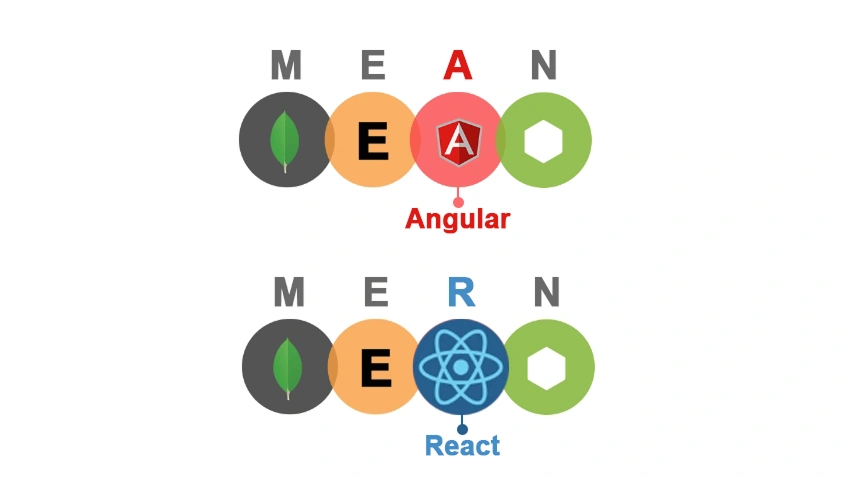
B.A. graduates have creative minds and are critical thinkers, which are valuable in the technology field. You can consider learning MEAN (MongoDB, Express.js, Angular, Node.js) or MERN (MongoDB, Express.js, React, Node.js) to start a high-paying career in the technology field. There is a huge demand for MEAN and MERN developers in India as well as abroad, which makes it one of the best short-term courses after graduation in Arts.
A pen is mightier than a sword–the proverb is indeed true. Be it websites, television commercials, brochures, or YouTube videos, content is ruling the market. The need to be on the edge and create something new translates into a lucrative career for individuals who can develop quality content. Content writing is among the best professional courses after graduation in Arts.
Career Opportunities
After completing the content courses after BA, you can explore various job roles in the field, such as:
Content writer
SEO writer
Social media writer/manager
Copywriter
Technical writer
Content marketing specialist/manager
Blogger
Editor/proofreader
Content manager
Script writer
Email marketing specialist
Corporate communications writer
Salary Expectations
Job Role
Expected Annual Salary in (₹)
Content writer
₹1,20,000 to ₹7,00,000
SEO writer
₹1,20,000 to ₹6,40,000
Technical writer
₹2,70,000 to ₹15,00,000
Copywriter
₹2,00,000 to ₹10,00,000
Content manager
₹2,40,000 to ₹17,00,000
Email marketing specialist
₹2,20,000 to ₹11,80,000
PHP – Laravel and Vue.js
Your creative and analytical strengths can help you carve a rewarding career in technology. Mastering PHP Laravel and Vue.js enables you to build the engaging and interactive interfaces that every modern business needs. This 6-month course after graduation in Arts leads to a well-paying, high-demand, and rapidly growing career in technology.
Photography is another course that unveils your creative storyteller through a picture. If you like capturing moments, why not turn this passion into a career by joining a short-term photography course? In this course, you can be a master of your camera, understand composition, and craft stunning pictures.
Career Opportunities
After completing the photography courses after BA, you can explore various job roles in the field, such as:
After completing your graduation in Arts, you can leverage your transferable creative and analytical skills for web development. A practical-focused MS ASP.NET Core and Angular course can transform you into a professional who can craft interactive and engaging user interfaces.
If you have done your B.A. in linguistics, a short-term foreign language course can boost your career. The increasing globalisation has created a significant demand for various foreign languages, specifically in French, German, Spanish, and Mandarin. Individuals with foreign language skills are highly valued across India, which enhances career opportunities.
Career Opportunities
After completing the foreign language course after BA, you can explore various job roles in the field, such as
Translator
Interpreter
Foreign language teacher/tutor
Tourism and hospitality professional
Customer service representative (multilingual)
Journalist/foreign correspondent
Voice-over artist (multilingual)
Salary Expectations
Job Role
Expected Annual Salary in (₹)
Translator
₹1,00,000 to ₹9,50,000
Interpreter
₹2,20,000 to ₹10,60,000
Foreign language teacher/tutor
₹1,00,000 to ₹7,00,000
Customer service representative (multilingual)
₹1,20,000 to ₹16,00,000
Journalist/foreign correspondent
₹1,80,000 to ₹8,00,000
Voice-over artist (multilingual)
₹1,00,000 to ₹10,00,000
Data Science with Gen AI
BA graduates possess good social science and humanities training in analysis, interpretation, and communication. All these aspects are a vital part of data science, making this path one of the best short-term courses after graduation in Arts. A short-term data science with GenAI and ML course equips you with skills to apply your existing skills to extract hidden patterns, large datasets and convert complex data into impactful yet clear information.
Event management is a path that not only offers a stable career but also a vibrant professional life. From grand exhibitions and weddings to year-round celebrations, event management offers dynamic projects that keep your life busy and dynamic. If you have an interest in this field, you can take up a short course on event management to kick-start your career.
Career Opportunities
After completing the event management course, you can explore various job roles in the field, such as
Event planner/coordinator
Event manager
Wedding planner
Corporate event coordinator/manager
Exhibition organiser/manager
Festival and concert organiser
Venue manager
Logistics manager
Production manager
Catering manager
Sponsorship coordinator
Public relations (PR) specialist
Event marketing specialist
Salary Expectations
Job Role
Expected Annual Salary in (₹)
Event planner/coordinator
₹50,000 to ₹7,20,000
Event manager
₹1,30,000 to ₹12,00,000
Wedding planner
₹1,80,000 to ₹7,20,000
Exhibition organiser/manager
₹60,000 to ₹7,00,000
Catering manager
₹1,10,000 to ₹16,00,000
Public relations (PR) specialist
₹3,00,000 to ₹12,90,000
In Summary
While the job market is getting increasingly competitive, if you pick the right path, you can become a high-earning professional in no time.
However, a graduation degree isn’t enough in this competitive world; equipping yourself with practical skills before getting to the real battlefield is essential. Here, enrolling on 6-month courses after graduation in Arts can be your launchpad to a highly successful career.
So, don’t wait anymore!
Contact us today! Let us know your interest and start a discussion on how we can help you turn your passion into a successful career through our short-term job-oriented courses!
“A programming language is like a natural, human language in that it favors certain metaphors, images, and ways of thinking.”-Seymour Papert
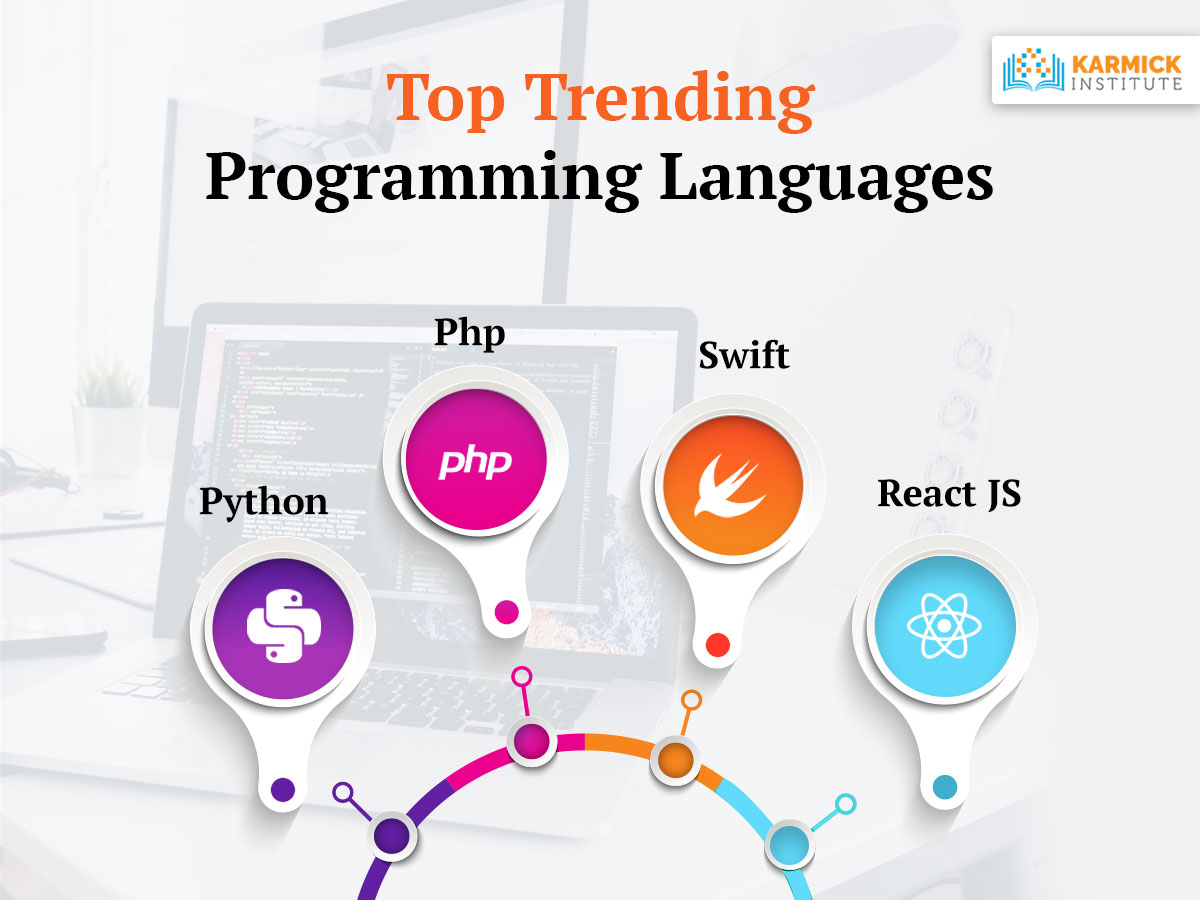
The above quote by the renowned computer scientist and educator clearly underlines the importance of programming languages. Since the release of the first ever programming language (FORTRAN) in the 1950s, the world has witnessed a surge in the number of programming languages, for example, Pascal, C, C++, Objective –C, Perl, Python, and so on. But in a dynamic world of programming, there is no wonder that some languages are all set to fade within the next few years. As every cloud has a silver lining, there are some programming languages that have not yet lost their significance over the years and are trending among developers. So, let’s have a look at the top trending programming languages.
Python
First surfaced in 1991, Python is a high-level language which finds its application in an array of projects like big data, artificial intelligence, server configuration, desktop applications, and even machine learning. The strength of Python lies in its ability to express a complex instruction in a few lines of codes as well as its readability. Several companies like Google, Facebook, Netflix, and others have employed Python for programming. In fact, the general-purpose language is the official server-side language in Google. Some of the stunning features of Python are as follows:
Swift has come a long way since its inception in 2010. Developed by Apple, it has emerged as a highly sought-after programming language in 2018 for writing iOS and OS X apps. It has the best features of C and Objective-C but does not has the constraints of C compatibility which makes programming in Swift faster and safer. At present, many iOS app development companies are hiring developers with knowledge of Swift language. For aspiring iOS app developers, it is best to learn the nuances of the powerful open-source programming language from a reputed training institute. Following features have vastly contributed to the popularity of the Swift language:
Intuitive and powerful
Open-source
Native-error handling
Requires less coding
React JS
Simple to use and easy to learn, the ReactJS is not a typical programming language like Python and Swift. It is a JavaScript library used for building user interfaces for single-page applications. Yet, as an intuitive language, it is employed by many bigwigs like Facebook, Paypal, Netflix, and Instagram. For mobile applications too, ReactJS has found several admirers because of its remarkable features that make things incredibly simple for front-end developers. Some of its bright features include:
Easier to learn and SEO friendly
Has a rich JavaScript library
Easy to debug
Useful for mobile applications
PHP
Over the years, PHP has evolved from a language of pure academics for freelancers to serious business. It has traveled a long distance in its journey of becoming advanced frameworks like Laravel, Yii, CakePHP, Drupal, and CodeIgniter to CMS tools like WordPress and e-commerce tools like Magento, Opencart, Zencart, WooCommerce, X-Cart, and more. Be it building large websites with dynamic elements or seamless integration with the popular Apache web server, the open-source language never disappoints. It is an integral part of the popular software stack LAMP (Linux, Apache, MySQL, PHP), widely used for web development. A large number of websites use PHP as a server-side scripting language because of its following features:
In a rapidly changing landscape of computer programming, it is imperative to learn the languages that are in the current trend to be in a significant position as a programmer or developer. It is vital to understand that these languages are here to stay in power for long. Even if they fade away due to the emergence of new languages, you can use your newly acquired skills to learn them. Knowledge never goes waste, so join a reputed IT training institute and start learning today.
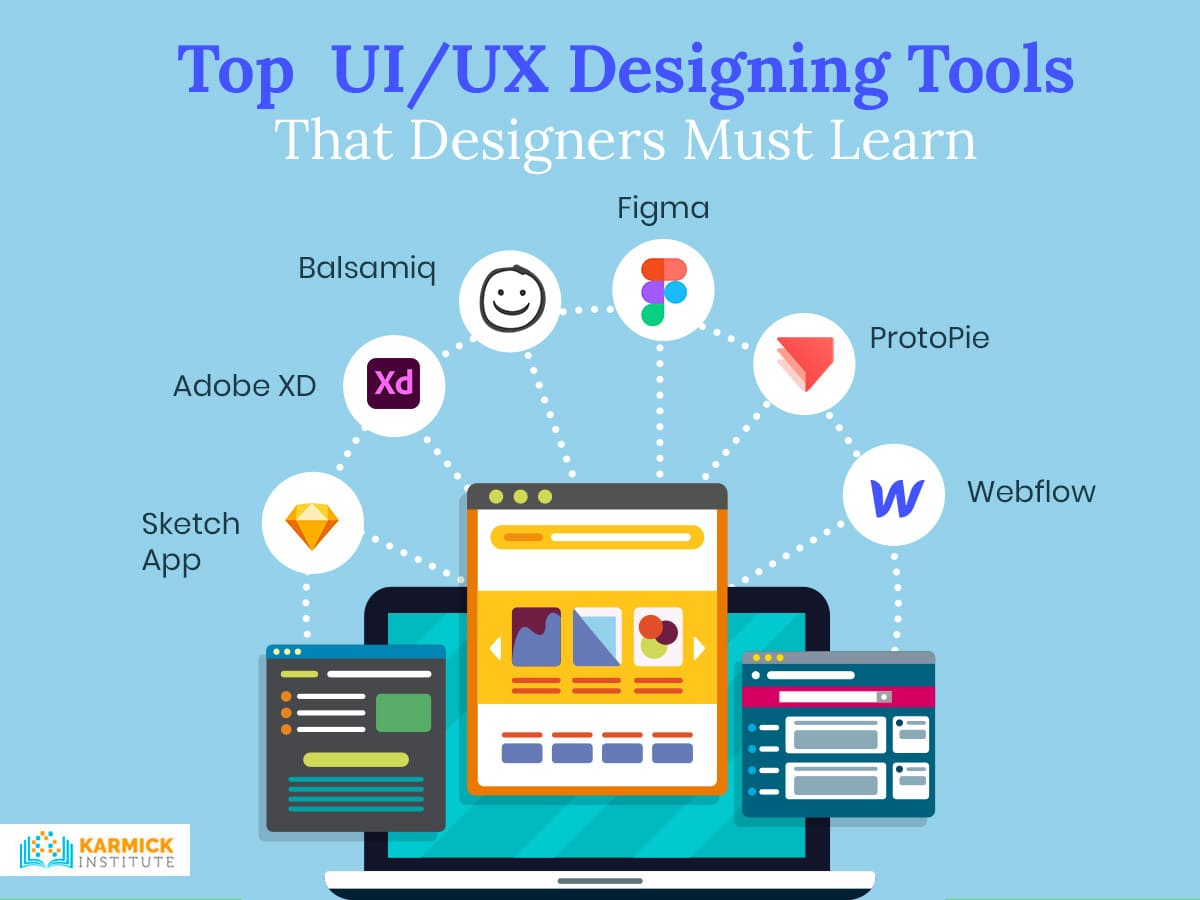
Just like a soldier is incomplete without his shining armor, a UI/UX designer is also imperfect without the best designing tools. If you are a newbie in this field, you may have to scratch your head to find the best designing tools. Even many experienced designers feel a great deal of confusion as there are several tools that they must learn. However, no worries! Here are the top UI/UX designing tools that designers must learn.
SketchApp
SketchApp is a remarkable designing tool that is quite popular among UI/UX designers to create unique websites and apps. It comes with many features such as intuitive vector editing tools, easy exports, cloud sharing, and zoom up to the pixel level! The highly scalable Sketch app comes as a complete digital design kit.
Adobe XD
Are you familiar with Adobe Creative Cloud Suite? If yes, working with this excellent vector-based tool may seem like a cakewalk. It is not just for designing or prototyping but also for sharing, collaborating, and much more. Moreover, it is also available as an app that can run on Android and iOS mobile devices.
Balsamiq
If you want to provide a visual understanding of a webpage to someone at an initial stage, wireframing becomes essential. Balsamiq is a fantastic wireframing tool with its multiple UI components, reusable symbols, drag, and drop functionality, and much more. Moreover, as it is a simple tool, even non-technical folks can use it to create a pretty wireframe within no time!
Figma
The web-based designing tool scores some brownie points from designers as it facilitates real-time collaboration, prototyping, and faster workflow. It also comes with powerful built-in features such as smart animate, advanced version control, and a vast plugin library that makes designing a breeze.
ProtoPie
If wireframes are the skeleton of your digital product, prototyping is vital to make your design more acceptable for others in the design phase. So, as the name suggests, ProtoPie is a prototyping tool that does not require any coding at all. It also allows the designers to test their prototypes on real devices, which is crucial for creating a functional design.
Webflow
If you are keen to work with a designing tool that facilitates you to create professional-looking websites with no code, trust Webflow. The tool acts as a visual canvas that empowers designers to create immersive interactions, animations, and responsive designs with easy preview and layout adjustment facilities.
Now that you know the top UI/UX designing tools, your next course of action should be to try some free trials to understand what can work best for you! However, it is imperative to remember that more than the tools, you must have the requisite skillset to create the best UI/UX designs, and for the same, you must opt for a job-ready web design course offered by Karmick Institute. The cherry on the cake is that it also guarantees placement assistance!
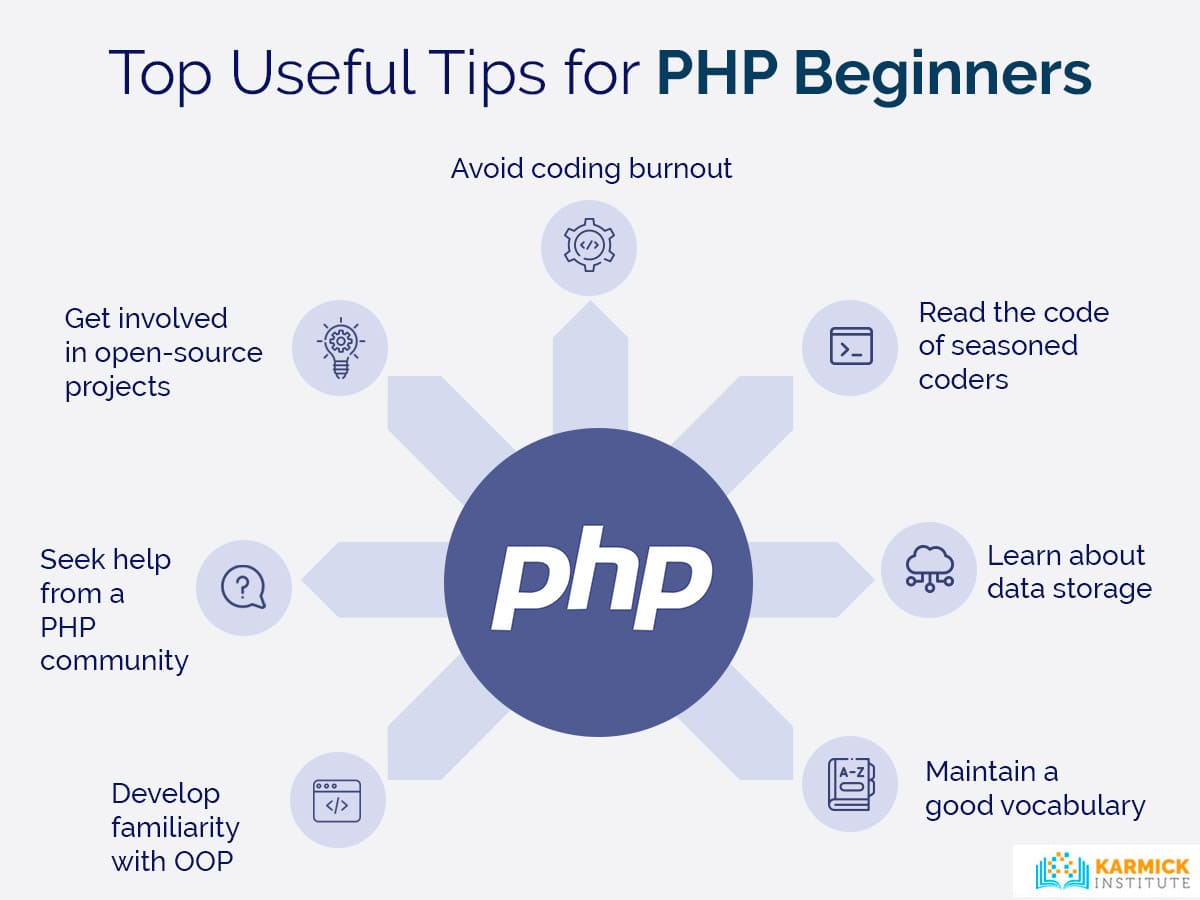
Although PHP is a popular programming language used for powering websites and web applications, including Facebook and WordPress, many PHP beginners find it tough to learn a new language. They always look towards ways of some PHP tricks and hacks. So, if you are also a novice, here are some useful PHP tips for beginners. Let’s have a look.
Develop familiarity with OOP
According to many PHP experts, instead of diving straight into the open-source general-purpose language, it is best to first develop familiarity with object-oriented programming. Learning OOP will eventually pave the way to become a valuable PHP coder. This is especially true if you are not from the tech industry.
Seek help from a PHP community
If you could not solve a problem even after repeated attempts, don’t be shy from seeking help! There is a vast PHP community that is friendly and helpful. So, it does not matter whether you are in an open-source project community or in a PHP user group, the road ahead will be smooth.
Get involved in open-source projects
As soon as you become well familiar with the basics of PHP, try on your hands on open-source projects as this will give you access to the source code, and you will get a golden opportunity to learn a lot about PHP programming.
Avoid coding burnout
Most PHP experts advise new developers to avoid coding burnout. New developers start PHP programming with a mindset to just make it work, and this mindset does more harm. When things do not work as expected, they get frustrated after making a few efforts and experience coding burnout. It is essential to understand that you can’t be a PHP expert overnight.
Read the code of seasoned coders
Instead of wasting time on reinventing any wheel, you can make better code by reading the codes of seasoned coders. Try to understand how they write error-free human-readable code and that too in a much simpler way.
Learn about data storage
In most cases, PHP is used to create web applications that use data in myriad ways to solve everyday problems. So, as a PHP newbie, it makes perfect sense to learn about data storage. Also, if possible, pay attention to SQL as you may need to deal with databases at an early stage of your career.
Maintain a good vocabulary
The bulk of the PHP vocabulary is made up of functions, interfaces, classes, and constants. So, maintaining a good vocabulary will ultimately help you to expand the functionality of your website or web app. Make use of PHP.net as it has an extensive PHP manual to get help in expanding your existing vocabulary.
While it is true that many developers across the world are using PHP, it is imperative to go through the online resources and avoid security problems. Yes, you can learn PHP from countless free resources available over the web, but the best move is to enroll yourself in a reliable PHP training institute. This will save your precious time and effort. Moreover, in the wake of COVID-19, many PHP course training institutes are also offering 1:1 online training!
According to Internet Live Stats, there are over 1.5 billion websites over the web. Many of them may be beautifully designed to grab the attention of the visitors. Entrepreneurs all over the world put effort to have well-designed and functional business websites. No wonder, there is a steady demand for skilled web designers who can create websites that are stunningly beautiful with an improved user-interface.
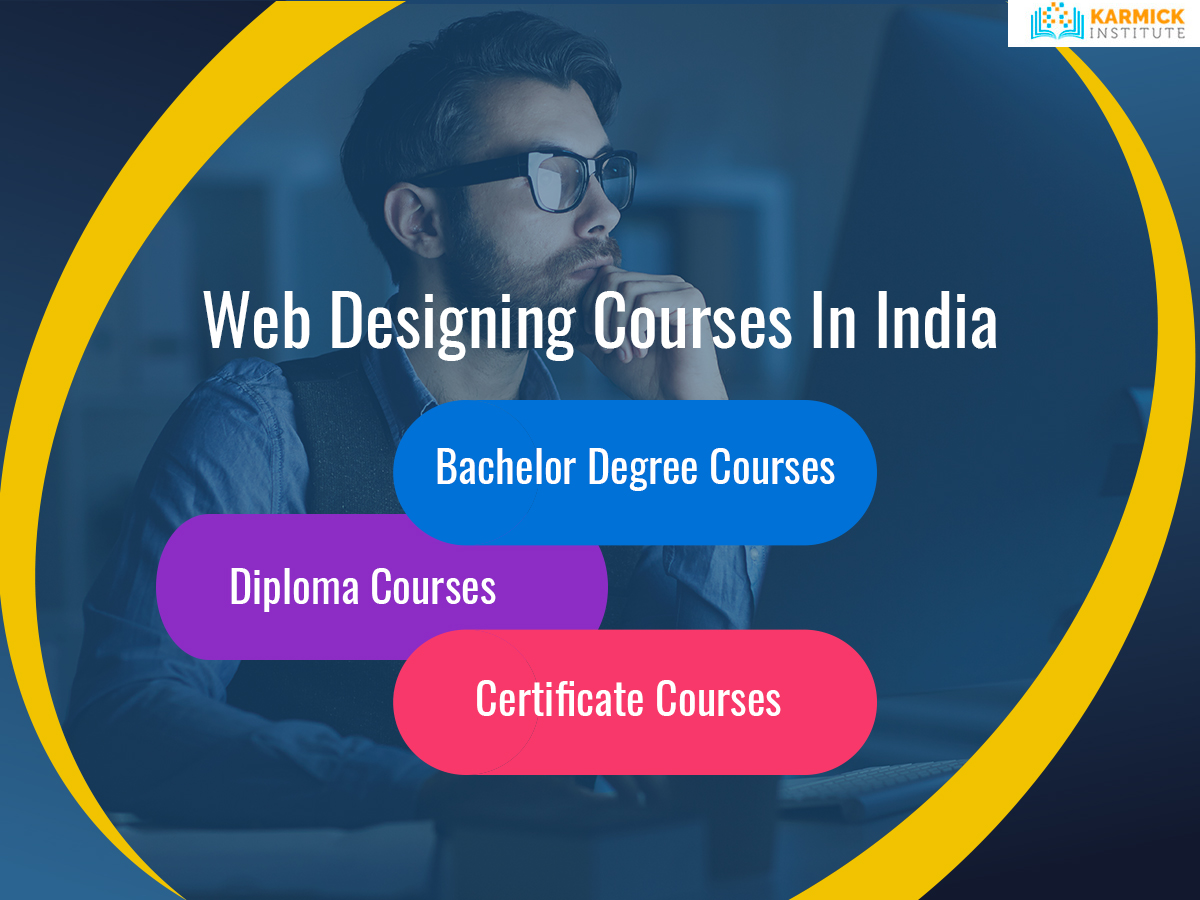
Generally, those who have a creative streak prefer to join a web designing course. However, almost everyone can learn web designing without much difficulty from expert faculties. So, are you someone keen to join a web designing course in India? If yes, it is best to know about the types of web designing courses that are available in India.
Bachelor Degree Courses
In India, only a few colleges and universities offer a bachelor’s degree course in web designing. You can opt for an online bachelor degree course in web design and graphics if you are working somewhere and leaving your regular job is not possible for financial or other reasons. Qualification for joining a bachelor degree course in web design may vary from one university to another. However, you will likely acquire a comprehensive knowledge of HTML, CSS, basic internet protocols, graphics, scripting languages, cybersecurity, and more.
Here is the list of colleges where you can join a bachelor’s degree course in web design in India.
Note: In B. A Multimedia, you will learn a broad range of concepts starting from graphic design and web design to animation, film production, editing, VFX, and more.
Diploma Courses
These courses are usually of one to two years duration. Anyone after 10+2 can go for a diploma course in web designing. However, some educational institutes have some specific criteria for admission. The course is completely career-oriented and offers a thorough knowledge of web designing concepts so that after successful course completion, one can get placement in IT firms as a web designer, UI designer, UX designer, and so on. The course fee of a diploma in web designing in India can be anywhere between 50,000 to 4Lakh.
Here are the names of a few institutes that offer a diploma in web designing in India.
Nagaland Institute for Advanced Informatics (NIAI), Nagaland (Diploma in Web Designing –Duration-Six months) Lyallpur Khalsa College Jalandhar (PG Diploma in Web Designing-Duration-One year) Caba Innovatives, Delhi (Diploma In Web Designing-Duration-8 Months)
Certificate Courses
These courses are of short duration from one month to six months. Owing to the huge demand for skilled web designers in India and the existing skill gap, certificate courses in web design are now well-respected by the majority of IT firms. Most of the institutes offering such courses also offer placement assistance. Moreover, a lot of people are now opting for a certificate course instead of a degree or diploma course because these are short in duration and offer good job prospects.
Some of the training institutes that offer certificate in web designing are as follows:
MITCON eSchool, Pune (Certificate Course in Web Designing (Cascading Style Sheets), Duration-6 months) Karmick Institute, Kolkata( Certificate in Web Designing, Duration-3 months) Zee Institute of Creative Art (ZICA), Pan India location (Program in Web Design, Duration-6 months) Pearl Academy, Delhi-West (User Interface (UI) Design Certification, Duration-11 months )
Some of these certificate web design courses are available at an affordable course fee. Some web design training institutes even offer flexible learning hours at weekends which makes these courses more appealing to professionals who want to acquire web designing skills while doing their respective regular jobs. So, choose the best one that suits your needs and have the first step towards a glorious career ahead.
Are you a student who is looking to make it big in the coding community? You must have heard horror stories of how difficult it is to do so. Let me clear the myth and tell you that it’s not. At the same time, it’s not something you can achieve overnight. All it requires is perseverance, passion and patience on your part. There are many resources available both online and offline that will help you make your journey smoother.
But first, what does a computer programmer exactly do?
A programmer is someone who writes code in a programming language that gives the computer or any other device instructions pertaining to the task at hand. Simply put, a programmer commands a machine through its language.
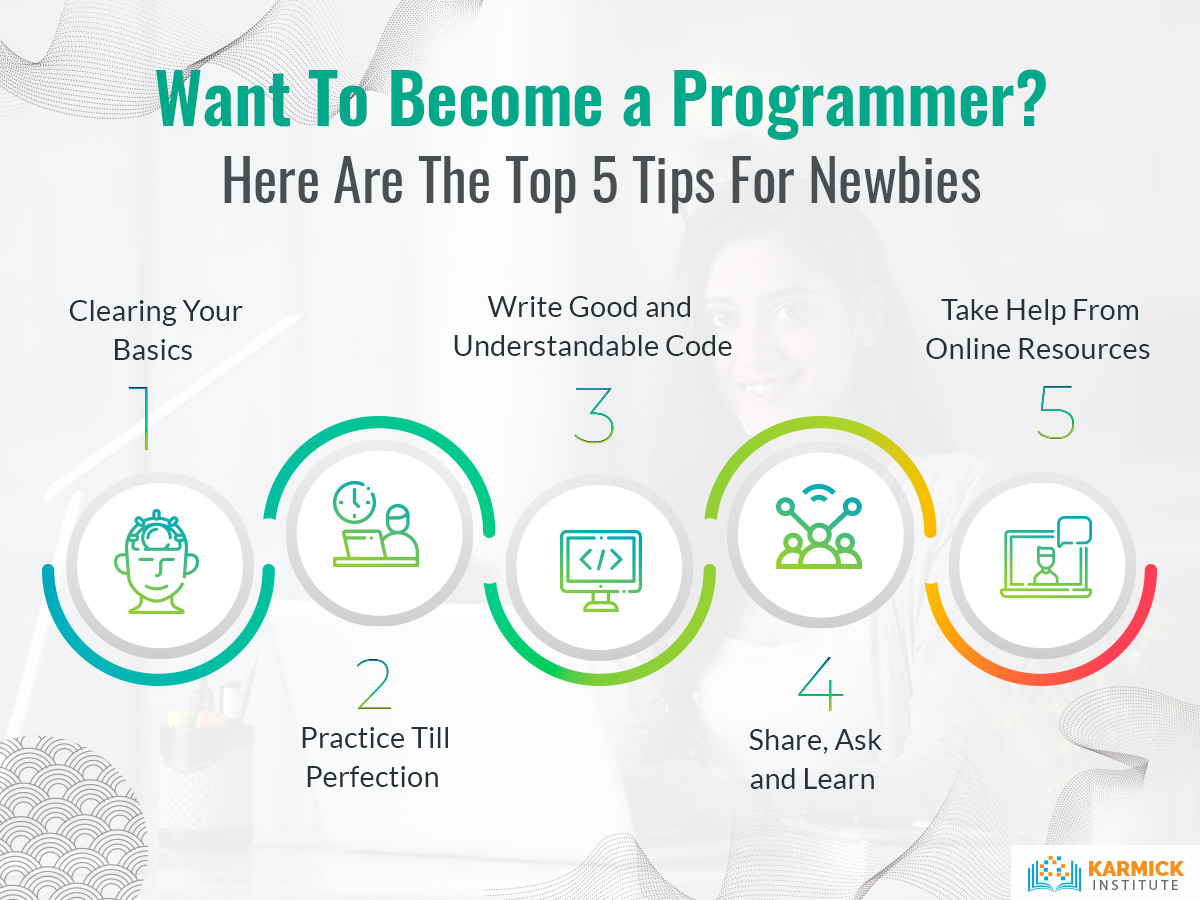
So now I hope you have a clear understanding of the role of a computer programmer. If you find this career interesting and are looking to pursue it, here are the top 5 tips that will definitely help you-
Clearing Your Basics
One of the common mistakes that students often make is to skip that first chapter or first lesson. Herein, the basics of programming such as syntax, variable and data structures are taught. They may seem a bit dull at first but until and unless your basics are absolutely clear, you will not be able to do advanced programming. Students who get their basics right and do not rush through it, tend to do better later on.
Practice Till Perfection
Sometimes what beginners do is read up a lot on programming without ever practicing a single code. That is not how the practical world works. Only if you are practicing it everyday, will you get better at it. Otherwise anyone could mug up textbooks. When you practice writing the code, you get to play around with it, modify it and optimize it for better results. Never be afraid to experiment with different solutions. These will help you develop skills that will help you stand out in the job market.
Write Good and Understandable Code
When you are writing codes, keeping it short is important. Avoid getting into unnecessarily complex codes and replace them with short, logical and simple ones. Prioritize quality over quantity. You will be less likely to make mistakes and debugging your code would be much simpler. You will save a lot of time if you learn how to use a debugger or similar tools to rectify errors. The sooner you learn to use debugger and write logical code, the faster you’ll learn.
Share, Ask and Learn
Sharing your knowledge and discussing things with other programmers will help in honing your own skills. Don’t feel shy to share or ask your programming related queries. Even the experts in this field were once in the same shoes that you are in. When you are stuck on an immovable bug, sometimes all that’s needed is a fresh pair of eyes and a different perspective. Explore and contribute in popular online discussion forums such as GitHub.
Take Help From Online Resources
Don’t just stay confined to the resources provided by your course or class. Open the web and explore. There are tons of free resources out there related to programming and coding. You will always find a tutorial, blog or other study material related to what you were looking for. You can always look up platforms such as YouTube, Coursera and Udemy for both paid and unpaid resources. Many successful coders have taught themselves just by using the internet.
Remember that the key is to remain confident and optimistic. Coding can get challenging at times but with some experience and a logical bent of mind, you can overcome all hurdles. The 21st century we live in witnesses a lot of new frameworks and APIs each day but what remains constant is the concrete base of coding which you need to master. So, what are you waiting for? Go out there and enroll in a programming course of your choice! The job market for coders is hot right now and with the right set of skills, you can get your dream job.
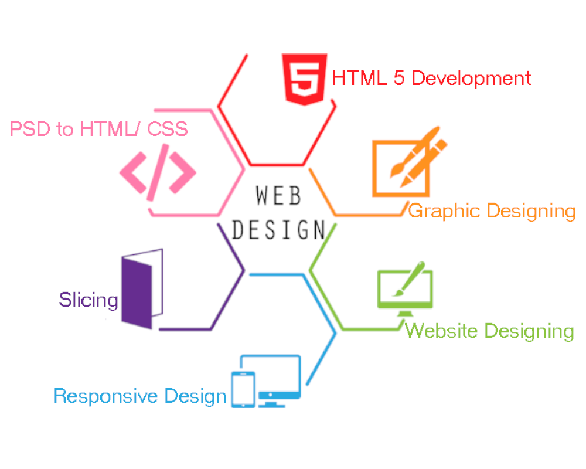
Web Designing is not a new concept in today’s world. It has now become an integral part of IT industry. It is simply the planning and creation of responsive websites. The web designers use images, text, HTML5, responsive web design, bootstraps, CSS3, Photoshop and many more elements to create a web page. They mostly use the markup language like HTML for creating a structure and CSS for presentation.
While choosing a career as a web designer few questions click to the mind like what is web designing? What is the job role of a web designer? What is the career perspective of this course? What are the areas that the course covers? and much more. Well, web designing has a great career prospect as it is an integral part of the industry and almost every company needs their web presence to promote their products or services through internet. However, one might not be sure as to how to become a web designer? Well, one can enroll in a short term course to learn modern web designing tools and programs and join the industry.
The courses are of short duration which can last up to 3 months. In this short duration, the professional faculties train the candidates in Photoshop, JavaScript, Dreamweaver, HTML, CSS, Bootstrapping and so on which helps to create responsive websites. The candidates are trained on UI and UX based design styles. They are trained to implement cross browser compatibility on websites. To boost the confidence of the candidates, they are allotted with live projects where they have to make the practical application of tools and techniques that they have learned.
Upon successful completion of the course, the students are required to clear a test after which they become a certified web designer. This certification helps them to bag a job in different industries like media, education, software industry etc. One can enroll in the course after completing the 12th standard.
The designers are entitled to take big responsibility as they can create a good visual impact and user-friendly websites. So, give your career a boost with Web Designing Training at Karmick Institute.
 info@karmickinstitute.com
 +919836423755
  +919836423755

 Login
Login