info@karmickinstitute.com
 +919836423755
  +919836423755
Get up to 25% OFF on all IT courses Enrol Now Only 20 Slots Remaining! Limited Time Offer!
By Tanmay Das
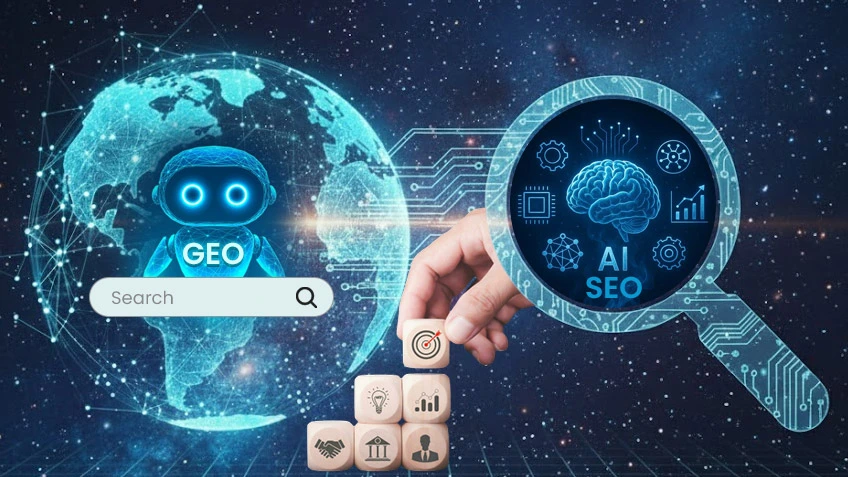
What if I told you that 2026 is the best year to start a career in digital marketing? While experienced marketers are struggling to keep up, a huge new opportunity called GEO (Generative Engine Optimisation) has emerged.
Currently, 80% of consumers rely on AI-generated results for nearly half of their searches. However, only a few marketers know how to optimise for them.
With AI platform traffic growing by over 500% year-over-year, the expertise in GEO is becoming one of the most sought-after titles in the industry.
Whether you are a student or a career switcher looking to carve out your career in the GEO, in this guide, we have included all the essentials you need to know about this field, which will help you dominate the new AI-first SERP (search engine result pages).
Let’s get started!
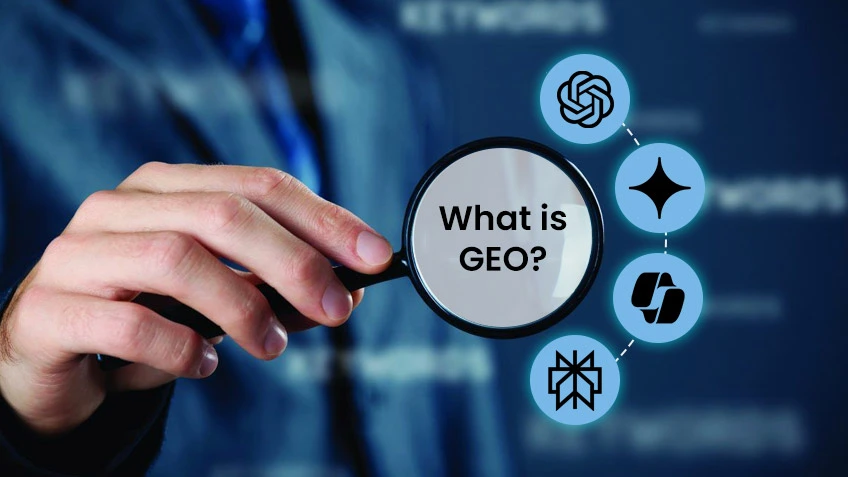
GEO stands for Generative Engine Optimisation. It is one of the newest digital marketing strategies that doesn’t focus on keywords or backlinks, rather emphasising how AI perceives your content as authoritative or factually correct.
Simply put, GEO is the future of SEO. If SEO (search engine optimisation) is about getting a website on top in search engines like Google, GEO is about getting AI models like ChatGPT, Gemini, and Claude mention your brand as answers to different user queries (relevant to your industry).
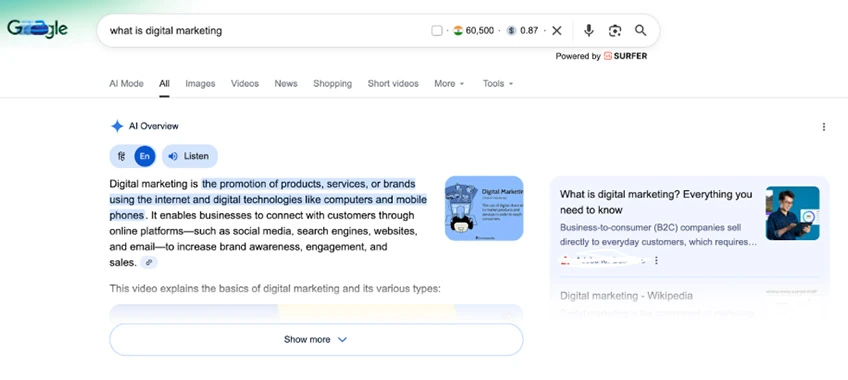
The AI Overview section is significantly reshaping the SERP layout, as shown in the image.
While traditional SEO is about making a website easy for a computer to index, GEO is about making your content easy for an AI to understand and trust. Here are a few ways our search habits contributed to the rise of GEO:
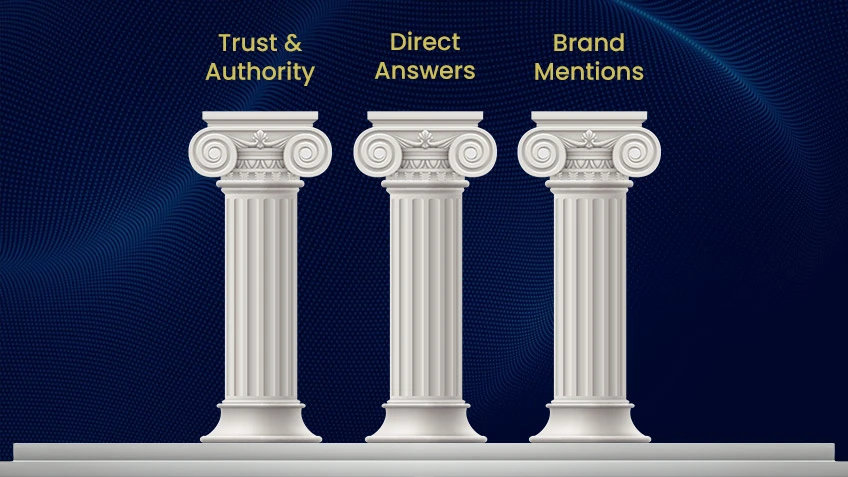
To rank in AI-generated results, you must optimise for how machines verify, extract, and validate information across the web. To master GEO, you need to focus on three main things:
1. Trust & Authority
AI models look for factual data, expert sources, and verified credentials to ensure the information is accurate and trustworthy.
2. Direct Answers
AI looks for clear, short summaries and headings that allow it to extract the exact answer without going through long text.
3. Brand Mentions
AI looks for your brand mentioned across news, social media, and forums to check whether you are a popular and trusted industry leader.
As search engines have evolved into AI answer engines, most companies have changed their methods of reaching their target audience. Today, GEO is no longer an option; it is an essential part of digital marketing that bridges the gap between content and an AI-driven web. If a brand is not part of the AI’s response, it will become invisible to modern users.
The following points highlight the importance of GEO in digital marketing:
The shift from SEO to GEO is not just any technical update; it has fundamentally changed the communication between brands and their target audience. Earlier, digital marketing was a race between brands to get to the top of the search engine result pages. However, today it is more about becoming a trusted source that AI gives your content as a final answer to a specific query of a user.
Instead of targeting specific phrases like “cheap flights in Europe,” GEO focuses on answering more complex and natural questions like “What’s the most budget-friendly way to travel in Europe in June?
From Clicks to Citations
Earlier, a website’s success was measured by the traffic it got. Now, in the age of GEO, the success of a website is measured by how many times an AI cites a specific brand as an expert at the top for a specific search query.
The Rise of Zero-Click Discovery
Now, users get their answers directly at the top without clicking any link. This means a brand must be optimised to get visibility through AI engines to stay relevant and gain instant authority among its target audience.
Quality Over Quantity
AI models are very smart, and they quickly filter out quality from the quantity. It prioritises content with unique insights, factuality, verified stats, and specific data over long-form, repetitive blog posts.
Reputation as a Ranking Factor
Artificial intelligence scans beyond your website. It analyses what reputed sites, including news sites, Reddit and other high-authority forums are saying about a brand. This means an off-page reputation has become a crucial factor for GEO.
Future-Proofed Relevance
As AI answers the user’s question directly at the top, GEO helps a brand win the “impression” and build brand authority instantly, even without the user visiting its website.
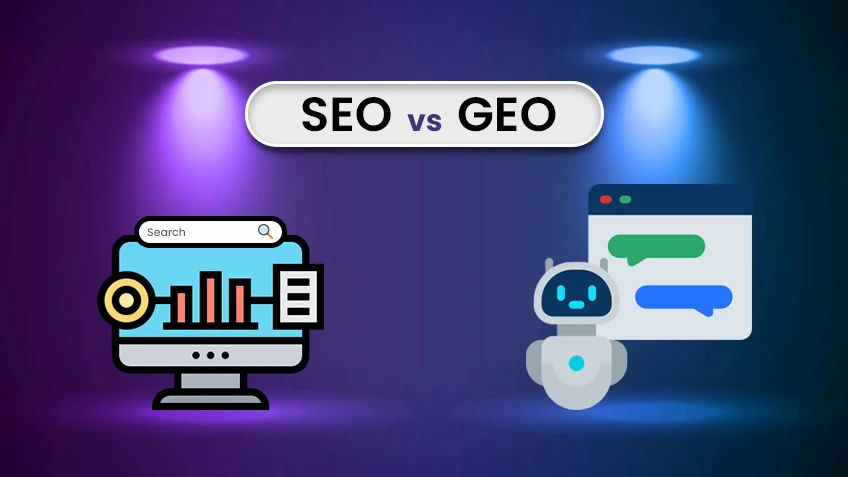
| Feature | SEO | GEO |
| Primary Goal | Rank #1 on Google Search. | Get cited in an AI’s answer. |
| User Action | User clicks a link to visit a website. | User gets answers inside the AI chat. |
| Content Style | Focused on Keywords. | Focused on concepts & trust. |
| Success Metric | High CTR (click-through rate). | Being mentioned as a “Top Recommended” source. |
| Optimisation Focus | Metadata, site speed, and backlink quantity. | Factual accuracy, unique insights, and testimonials. |
| Target Algorithm | Search Crawlers (like Googlebot) that look for site structure and links. | Large Language Models (LLMs) that “read” and summarise content for meaning. |
If you are thinking of starting a career in digital marketing, learning GEO is not an optional skill to acquire. As AI engines like ChatGPT, Gemini, and Perplexity have become a primary source of finding any information for most of us, learning how to make them recite a specific answer is what will separate you from the crowd.
The following pointers highlight why learning GEO is essential now and what benefits this skill offers:
High-Paying Career Roles
As numerous companies are racing to get cited by AI in search results, new roles like GEO Specialist and AI Content Strategist are emerging with higher average salaries ranging from ₹4 LPA to ₹10+ LPA.
Future-Proof Career
Learning GEO ensures your skills remain relevant even as search engines evolve into “answer engines,” preventing your marketing knowledge from becoming obsolete.
Competitive Edge
While most people are still stuck on old SEO rules, mastering GEO gives you an extra advantage, making you a rare and valuable asset in the competitive 2026 job market.
Improved Decision-Making
Understanding how AI selects and presents information helps you critically evaluate AI answers and strategically position content to influence those systems.
In-Demand Human Skill
GEO requires a uniquely human touch, the ability to provide real-world context, original insights, and ethicality that AI cannot generate on its own.
Building Expert Authority
GEO teaches you how to structure your web presence so that AI models like Gemini and ChatGPT recognise and cite you as the authoritative truth.
Mastering “Zero-Click” Visibility
With users getting answers directly from AI without clicking links, GEO is the only way to ensure your brand is seen and recognised in the AI’s response.
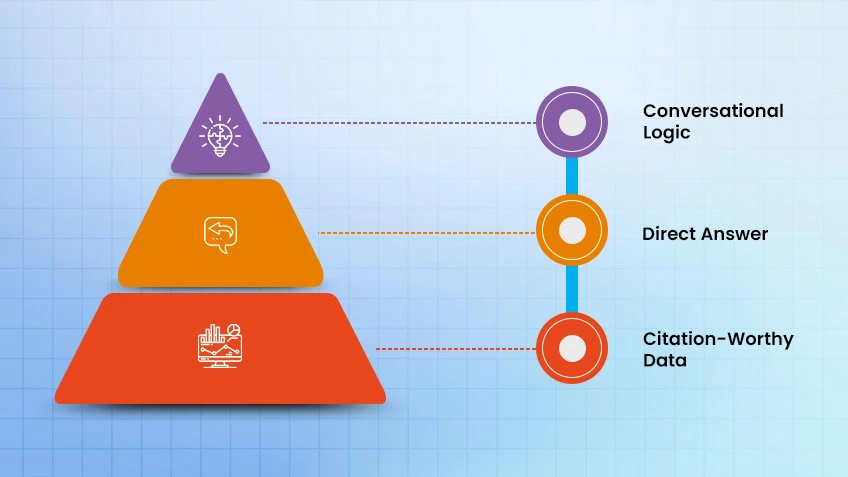
In the new world of GEO, generative engines have moved beyond matching keywords; they are now searching for the truth. GEO success is built on authoritative clarity and providing insights that make AI cite your unique perspectives as a response to a user query. The foundation of GEO success includes:
Citation-Worthy Data
AI-powered engines are built to provide real facts to the users, not fluff. Including original statistics, unique case studies or research can provide AI with the information where it can’t find anywhere else.
Direct Answer
Generative engines provide the most factual and concise information to the users. You can place a clear sentence summary at the beginning of initial sections to make it easy for AI engines to understand, extract the information and present it to the user.
Conversational Logic
Generative engine optimisation focuses on natural, conversational speech over search terms. You should structure content in a Q&A format to help AI models understand the intent and make it ideal for voice and chat queries.
SEO is not completely ‘’dead,” but it is no longer enough. As search engines integrate AI (like Google’s AI Overviews), you must learn to speak the language of AI models.
Mastering GEO ensures that when a user asks an AI for a recommendation, a specific brand is the one it suggests.
If you want to master this in-demand expertise, you can enrol in our digital marketing with AI course today. Not only will you be trained in cutting-edge AI-powered digital marketing tools, but you will also gain in-depth exposure to GEO.
Book a free career consultation today! 9836423755 | 6289562294 | 8910945693
How is SEO evolving?
SEO is shifting from “adding keywords” to “understanding meaning.” Today, it’s all about being helpful and human; search engines now prioritise content that actually solves a problem rather than just adding the right phrases.
What is the difference between SEO and GEO?
SEO is trying to get your website on top of the search results in Google. GEO is trying to get an AI like ChatGPT to include your information when it writes a summary or an answer for a user.
What is Generative Engine?
It’s a “smart” search engine that doesn’t just show you websites, it talks to you directly. Instead of you clicking five links to find an answer, the Generative Engine reads them all and tells you the answer directly.
Why is GEO the new SEO?
Because more people are asking AI for help instead of browsing through pages of search results, if you aren’t optimised for GEO, a business or brand can become “invisible” to people who only use AI to find what they need.
Will SEO exist in 5 years?
Yes, but the “search” part will happen everywhere inside apps, AI gadgets, and social media. We will always need to make content easy for computers to find, but focus will be more on optimising “answers” rather than just “clicks.”
How does GEO impact digital marketing?
It changes the goal from “get them to my site” to “get the AI to trust my brand.” Marketing now involves feeding the AI the right facts, reviews, stats, and data so that when a customer asks for a recommendation, the AI says a specific name first.
Is GEO replace SEO?
No, GEO doesn’t replace SEO; rather, it upgrades it. SEO is the foundation that helps Google find and trust your website; GEO is the extra layer that ensures AI models like Gemini or ChatGPT pick your content to use in their summaries. For instance, a healthy website (SEO) is required before an AI can even consider you a reliable source (GEO).
Why should I learn GEO?
You should learn GEO because search behaviour has changed: many people now want a quick AI summary instead of scrolling through links. By learning GEO, you will become part of this in-demand wave and become an indispensable asset for any company seeking to get cited by AI engines.
How does GEO impact my career now?
Learning GEO transforms you from a traditional marketer into a high-demand strategist. As companies are racing to stay visible in AI-generated answers, your ability to secure ‘AI Mentions’ makes you an indispensable asset. By mastering GEO, you are future-proofing your career for higher pay and job security.


 Login
Login