info@karmickinstitute.com
 +919836423755
  +919836423755
Get up to 25% OFF on all IT courses Enrol Now Only 20 Slots Remaining! Limited Time Offer!
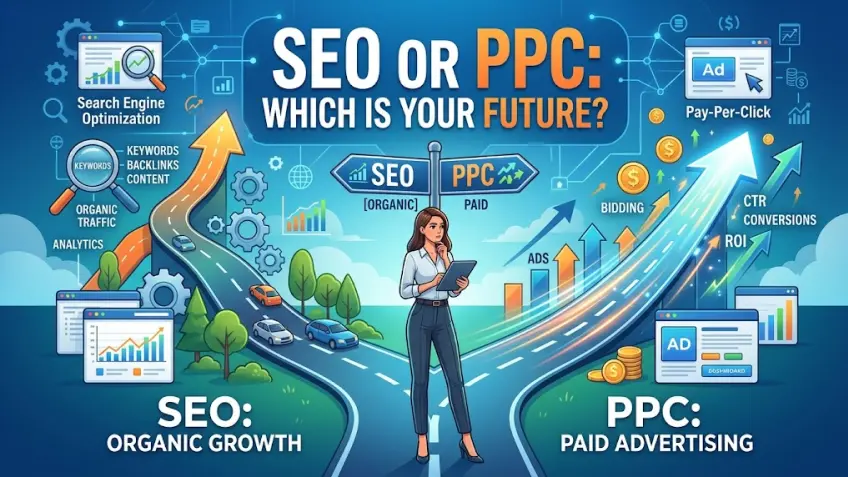
Thinking of building a career in SEO or PPC, you might be confused and overwhelmed right now. With the digital ad market set to hit $177 billion, both SEO and PPC are incredibly lucrative. Don’t worry! This blog breaks down the reality of both fields, the entry-level pay scales, and why 2026 is the most exciting year yet to start your career after graduation.
With the rise of GEO (Generative Engine Optimisation), and AI-driven searches, SEO have significantly evolved from a simple keyword placement into a strategy that builds brand authority and matches user intent.
If you’ve wondered, ‘Is SEO a good career?’ has shifted from keywords to understanding the person behind the search. On the other hand, PPC has transformed from manual bidding to complex, AI-managed online marketing and performance-driven strategies.
When it comes to the first paycheck, both SEO and PPC are highly competitive fields in India. While SEO entry-level pay ranges from ₹3.5 – ₹6 LPA, PPC associates can start their career at ₹4 – ₹9 LPA.
If you are confused about choosing between SEO and PPC, this blog includes all the essential details that you must know before starting a career in either.
To help you choose between a career in organic or paid search, you must first understand the core mechanics behind both SEO and PPC.
Dive in and make the smartest career choice in 2026!
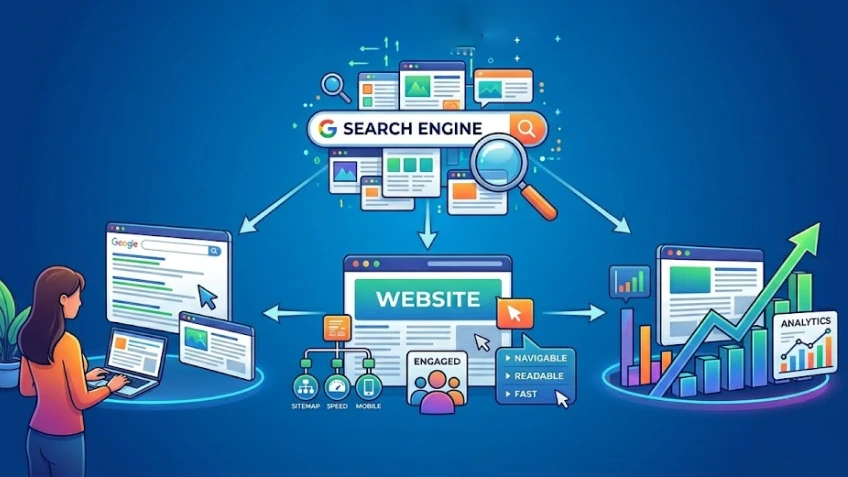
SEO or search engine optimisation is the practice of driving and increasing the traffic to a website through organic search engine results. SEO is a multidisciplinary field that involves 3 key pillars:
In 2026, SEO isn’t just for search engines; it’s for AI, too (AIO-AI Optimisation). This means ensuring that a brand appears in AI-generated summaries and LLM (Large Language Model) responses. This shift has opened up massive SEO career opportunities.
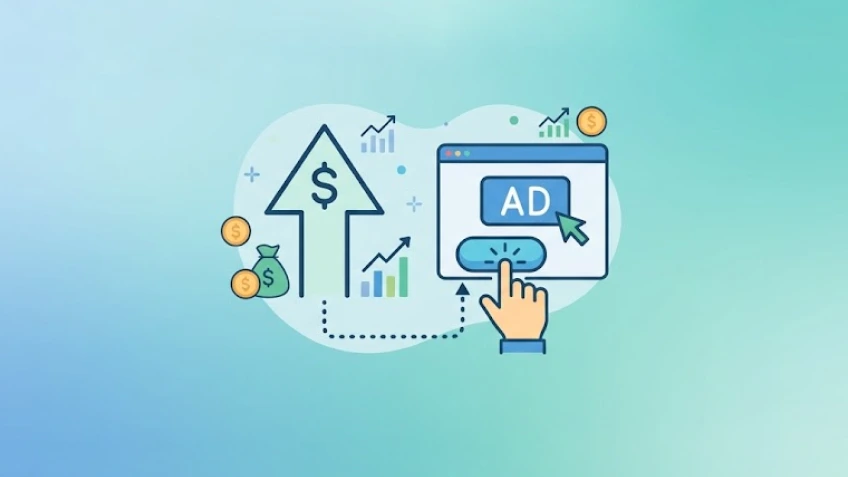
PPC or Pay-Per-Click is a digital advertising model where you pay a fee every time a user clicks on your ad. It is the method of purchasing visits and getting immediate results on a website rather than waiting for this to happen organically.
In 2026, PPC has evolved into a highly automated, AI-driven system that targets users based on their specific behaviours, interests, and immediate needs, making it a great career after graduation. It involves these key pillars:
| Feature | SEO (Organic Search) | PPC (Paid Search) |
| Primary Goal | Build long-term authority and free sustainable traffic. | Drive immediate visibility and instant conversions. |
| How does it work? | You invest time and money into high-quality content and a great website. Once you rank high, the visitors arrive for free. It focuses on on-page SEO and off-page SEO. | You pay a fee every time someone clicks your ad. If you stop paying for the ad, your visibility disappears immediately. |
| Financial Risk | Lower daily cost, but takes a long time to see a return. | Higher daily cost, but you see immediate results. |
| Results Speed | Typically takes 3–6 months to see significant outcomes. | Results can be seen within hours of launching a campaign. |
| Key Metric | Organic RankingsDomain AuthorityClick-Through Rate (CTR) | Cost Per Click (CPC)Conversion RateReturn on Ad Spend (ROAS) |
| Top Skill | Strategic storytelling and technical problem-solving. | Data analysis and high-pressure financial management. |
| Daily Workload | Content strategyTechnical site healthBuilding backlinks | Bid managementA/B testing ad copyBudget tracking |
| Stability | Vulnerable to AI algorithm updates (like GEO), but its value grows over time. | Predictable and easy to manage, but costs rise as competition grows. |
For SEO
GEO or Generative Engine Optimisation is the skill beyond keywords. It is the skill to optimise content for AI-driven searches and answer conversational queries; we can say we are moving from SEO to GEO. This skill allows you to establish brand authority and capture ‘zero-click’ visibility, which is the future of SEO and among the most sought-after skills today.
This includes mastering technical SEO, i.e., speed, stability, and schema (structured data). These skills help you optimise the core vitals of the web that help search engines read and understand your site content easily, helping it to rank well.
These skills are required to map content according to the specific user journey, e.g. ‘just exploring’ or ‘ready to purchase’ while maintaining the crucial aspect, i.e. EEAT (Experience, Expertise, Authoritativeness, and Trustworthiness).
This skill focuses more on digital PR, such as securing mentions on reputable websites by sharing original research and high-quality, data-backed stories, instead of using low-quality tactics.
This includes skills to use tools like GA4 (Google Analytics 4) and Google Search Console to analyse complex website traffic and find the underlying opportunities for growth.
For PPC
This skill is finding the balance between automated smart bidding in Google Ads with human oversight to ensure your budget is spent efficiently without waste.
This skill focuses on creating short, powerful messages that catch a user’s attention in a busy feed and convince them to click immediately.
This focus involves calculating exactly how much profit your ads make, ensuring every penny that has been spent is increasing sales.
This is a continuous process that involves trying out different headlines and images to see which version performs best and gives the best results.
This is specialised knowledge in a particular online marketing platform, like Google Ads, Meta Ads, or Amazon Advertising. This skill includes how to manage product feeds for Shopping ads.
To help you navigate your next career move, the comparison tables below break down the technical requirements, career trajectories, and latest salary benchmarks for both SEO and PPC professionals in 2026.
| Feature | SEO | PPC |
| Learning Curve | Requires a strategic blend of technical optimisation, creative storytelling, and data-driven analysis. | Fast to start, but requires mastery in strategic bidding and data-driven analysis. |
| Day-to-Day Tasks | AuditsKeyword mappingLink buildingGEO (Generative Engine Optimisation) | Campaign setupA/B testingBudget pacingBid management |
| Key Tools | SemrushAhrefsGoogle Search ConsoleTechnical SEOScreaming Frog | Google AdsMeta Ads ManagerMicrosoft AdvertisingExcel/SQL |
| Job Stability | Companies rely on organic traffic to survive, making SEO experts a necessity in any marketing team. | High in growth periods. But sensitive to budget cuts during recessions. |
| Remote Work Opportunities | Very high (40–45% of roles are fully remote). | High (Often hybrid or agency-based). |
| Feature | SEO | PPC |
| Career Ladder | Analyst → Strategist → Technical SEO Lead → Head of Organic Growth | Executive → Specialist → Performance Manager → Director of Paid Media |
| Career Paths | SEO Specialist / AnalystTechnical SEO SpecialistSEO ManagerSEO StrategistDirector of SEOVP of Organic Growth | PPC Specialist / AnalystPaid Search ManagerPerformance Marketing ManagerDirector of Paid MediaDirector of Performance MarketingVP of Growth |
| Core Skill Set & Mindset | Technical troubleshooting (HTML/UX)Storytelling skillsPatience | Mathematical precisionRapid decision-makingBudget management skills |
| Career Level | SEO(Annual Salary in India) | PPC (Annual Salary in India) |
| Entry-Level | ₹3 to ₹5 LPA | ₹3.5 to ₹5.5 LPA |
| Mid-Level | ₹4.8 to ₹15 LPA | ₹3.9 to ₹ 8 LPA |
| Senior Specialist | ₹7.7 to ₹11.7 LPA | ₹5.5 to ₹9.5+ LPA |
| Director / VP Level | ₹15 to ₹40+ LPA | ₹15 to ₹30+ LPA |
| Freelance | ₹3 to ₹8 LPA | ₹4 to ₹8 LPA |
In 2026 and beyond, the question is not just about which field offers more salary, but which one can offer a future-proof career in the rapid shift toward AI and automation.
Here is a breakdown of the future scope for both careers:
While specialising is a great start, the most successful marketers in 2026 are those who master both SEO and PPC. Learning both SEO and PPC are among the digital marketing skills that are in high demand. Mastering both can make you an elite candidate because you gain the skills to balance long-term growth with instant revenue.
By combining On-page SEO insights with Google Ads data, you become a versatile search expert, making both SEO and PPC the best short-term job-oriented courses. In a competitive market, managing a company’s entire search presence makes you far more valuable and harder to replace.
Karmick Institute’s Digital Marketing with AI program provides the hands-on training needed to master both SEO and PPC in one go. With Vishlesan I-Hub, IIT Patna certification, you can boost your resume and instantly stand out in the crowd.
Through our 100% placement assistance, we ensure you gain the confidence required to crack any interview and land your dream job right after the course completion.
Launch your high-paying digital marketing career with us.
Call/WhatsApp: 9836423755 | 6289562294 | 8910945693
Which is better, SEO or PPC?
As both SEO and PPC serve different purposes, neither is inherently better. While SEO is preferred for long-term organic growth and authority, PPC offers immediate and targeted sales.
What is the SEO job salary?
The entry-level SEO roles in India typically start between ₹3 LPA and ₹5 LPA. Experienced SEO managers or strategists can earn significantly more, ranging from ₹8 LPA to ₹15 LPA, depending on technical SEO expertise, location, and the company they are working for.
Is PPC a high-paying job?
Yes, PPC is among the highest-paid jobs because these professionals manage advertising budgets and ROI, which are essential for any business’s survival in this fiercely competitive market. Senior roles like Performance Marketing Directors or Lead SEM Specialists often command premium salaries from ₹15 to ₹20 LPA.
What is the salary of a PPC expert in India?
In India, while a PPC fresher can make between ₹3.5 and ₹5.5 LPA, as he/she progresses to a PPC specialist or managerial role, their salary can reach from ₹10 LPA to ₹18 LPA.
Which career pays more, SEO or PPC?
PPC comparatively offers a higher salary than SEO because the expertise directly impacts ad spend and measurable ROI, but professionals who have expertise in both SEO & PPC can command competitive pay.
Can I learn SEO and PPC together?
Absolutely! Learning both SEO and PPC together not only increases your employability but also boosts your earning potential. Many digital marketers start their career with one expertise and master the other for better results.
SEO vs PPC: Which is better for beginners?
If you enjoy creating content, research and technical troubleshooting without feeling the pressure of managing a daily budget, SEO is better. Whereas, if you are comfortable with numbers and want immediate results on your work through data and analytics, PPC is undeniably the better choice.
Which is easier to learn, SEO or PPC?
PPC is comparatively easier to learn than SEO because it is mostly formula-based and provides instant feedback through compelling metrics. On the other hand, SEO has a steeper learning curve due to constantly changing search engine algorithms and technical website requirements.
Should I learn SEO or PPC first?
Learning SEO first is recommended, as you understand how search engines work and how to create quality content that users actually want. Once you build a strong foundation in organic search, you can transition to PPC easily, as you will already understand keyword intent and user behaviour.

Prasenjit Das is a results-driven digital marketing analyst who offers practical guidance on mastering digital marketing. He equips learners with the practical skills needed to excel in today's competitive market.


 Login
Login