info@karmickinstitute.com
 +919836423755
  +919836423755
Get up to 25% OFF on all IT courses Enrol Now Only 20 Slots Remaining! Limited Time Offer!
By Tanmay Das

With AI Overviews providing the answers directly on the search results page, we’re rapidly approaching a world where an estimated 60% of searches become “zero-click. What does this mean for your career? It means the traditional rules of attracting traffic are obsolete, and your success depends on mastering the future of SEO with AI. This article is your essential roadmap that highlights why mastering AI for SEO together matters for career longevity.
With the rise of AI-powered search features like Google’s SGE (search generative experience), the old methods of SEO (search engine optimisation) are becoming outdated. As traditional SEO no longer guarantees success, mastering the next-gen AI and the future of SEO is crucial.
SEO, which has long been the backbone of digital marketing by driving an estimated 68% of all online activity, is now being radically transformed by the advent of LLMs (large language models) and artificial intelligence into a strategic advantage.
What does this mean for your CAREER?
The AI and SEO landscape is changing rapidly. For students who are planning their first step, professionals aiming for promotion, and career switchers looking for growth in the digital marketing field, understanding the future of SEO with AI is crucial.
This blog post is your essential roadmap that highlights AI and the future of SEO and why mastering both fields is crucial for career longevity.
Artificial intelligence and machine learning are not just any update in the SEO industry; these cutting-edge technologies are transforming the whole process. This technological evolution is pushing SEO professionals to adopt generative engine optimisation, where the entire success is measured by trust that makes a content cited source for generative answers, not by ranking position.
As an SEO professional, your core job will now be building a solid digital identity that an AI system understands, trusts, and recommends. The following pointers outline the key shifts that SEO professionals must adopt to succeed in the era of generative AI.
The advent of AI overviews, direct answer boxes, and featured snippets has dramatically increased ‘zero click’ searches. This means users are getting answers directly on the SERPs without needing to click through a website. This emergence has shifted SEO objectives from driving organic traffic to optimising content for citation and visibility within AI-generated summaries at the top.
Now, the new SEO goal is to get a brand cited in AI summaries, which prioritises visibility and authority (using metrics like brand mentions) even when users don’t click.
As search engines’ AI systems generate summarised answers, they heavily depend on the sources that demonstrate E-E-A-T, i.e. Experience, Expertise, Authoritativeness, and Trustworthiness, to give the right information.
Now, builidng a high EEAT is a prerequisite for visibility in AI-powered search. Brands should now buckle up and secure mentions from reputable sources to build credibility and establish themselves as a trusted source that AI trust to cite in the top.
Some of the most popular and best AI SEO tools in the world of AI and SEO, such as ChatGPT, Perplexity AI, Jasper, Surfer SEO, Semrush, etc., are becoming increasingly capable of automating repetitive, tedious tasks which earlier consumed a significant amount of SEO’s time. These AI SEO tools are capable of automating tasks like technical audits, large-scale keyword clustering, and monitoring competitor moves.
Delegating repetitive tasks such as data analysis, pattern recognition, and basic content generation to AI tools helps SEO professionals focus on more strategic, high-value work.
Advanced SEO AI tools can do beyond simple reporting; now these technologies are capable of using predictive analytics and NLP (Natural Language Processing) to identify emerging trends, model human intent, and find semantic relationships between different keywords.
This enables SEO professionals to strategically build comprehensive topic clusters, which helps in making a brand an authoritative source that AI cites as a summary at the top.
The rise of AI assistants and smart speakers has made search queries more conversational and complex. To succeed in this AI-powered SEO landscape, content must be optimised to provide direct, concise answers that are easily understood by Large Language Models (LLMs) and voice assistants.
This can be achieved typically through the strategic use of structured data, clear FAQ formats, and natural, human-like language that matches the user’s ultimate goal.
Generative AI models like ChatGPT and Gemini can quickly create high-volume, human-like, well-structured content. Whether it is product descriptions, summaries of a long-form blog, social media captions or images, Gen AI can generate any form of content. This allows businesses to cover niche topics and as many long-tail keywords as possible that earlier was missing in the resources. The adoption of SEO content writing tools and SEO writing AI means businesses can scale content production faster than ever.
However, a human intervention is necessary to polish quality, add experience and unique insights, and final editorial finesse that prevents content from being generic and ignored by the search algorithms.
AI-powered search engines are now capable of personalised SERPs more in-depth than earlier. Now search engines can easily factor in a user’s geographic location, search history, device, and predicted intent to provide a unique outcome.
For SEO professionals, this means the new challenge is to ensure content is technically accessible, flexible, and semantically optimised to appear as the most relevant result.
The SEO landscape is evolving at a rapid pace. With AI, automation, and voice search shifting the ranking and discovery of a piece of content in the search engines, simply knowing traditional SEO tactics will not make you a successful professional.
Students, graduates, and even professionals need to understand what the future of SEO with AI will be. This understanding will not only give you an upper hand but will also help you stay competitive and relevant in the rapidly evolving digital landscape. The following points highlight the essentials that beginners must understand to succeed in the modern, AI-driven SEO industry.
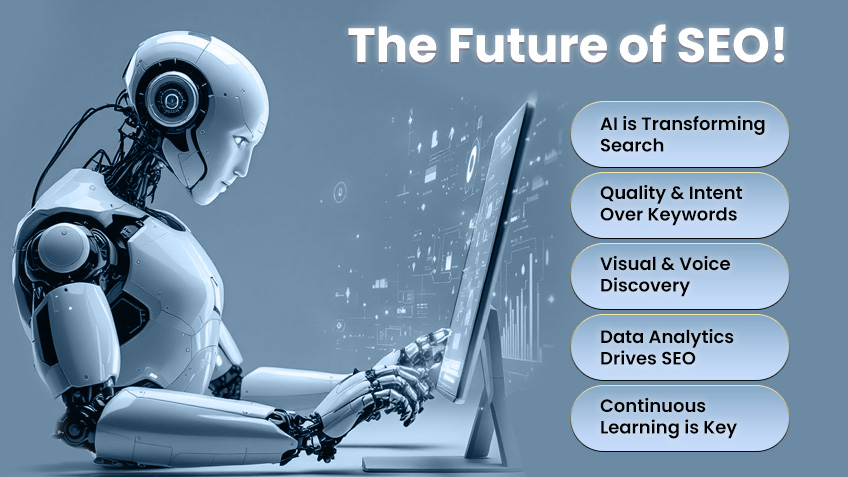
As already discussed, search engines are increasingly becoming smarter with AI-powered updates like SGE (Search Generative Engine). A thorough understanding of how AI analyses content, user intent, and semantic relationships will help you optimise for future search results.
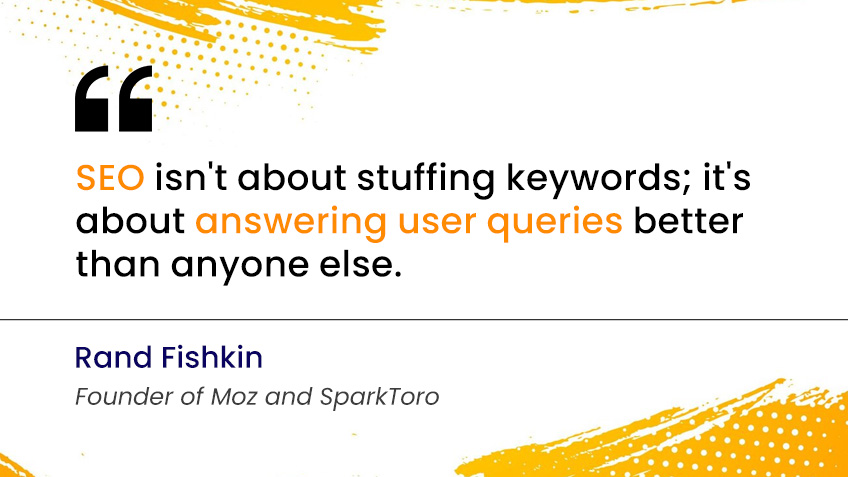
Keyword stuffing had worked in the past, but not anymore. The future of SEO with AI prioritises user-focused, meaningful content. You should thoroughly understand how to balance authenticity, creativity, and optimisation to connect and align with both people and algorithms.
Image and voice-based queries are on the rise; this phenomenon demands that SEO professionals adapt their strategies for better visibility. This includes an understanding of image optimisation, conversational keywords, and voice-friendly phrasing.
Looking at the rising demand for data analytics expertise, future SEO careers will require strong analytical skills. For this, you need to have a strong understanding of user behaviour, click patterns, and engagement metrics. This expertise will help you create data-driven SEO strategies that will give you positive and desirable outcomes.
SEO is a constantly evolving field. The dynamic nature of the domain demands continuous learning, experimentation, and adaptation. Undeniably, SEO is a good career, but you need to continuously learn and stay abreast with the latest developments, algorithm updates, and AI innovations to thrive in the future of search marketing.
The rise of AI is not only revolutionising how search engine operates but also the required skill set that SEO professionals need to succeed. The future of SEO in AI is no longer learning and mastering algorithms; it is now more about knowing how artificial intelligence impacts and interprets those algorithms.
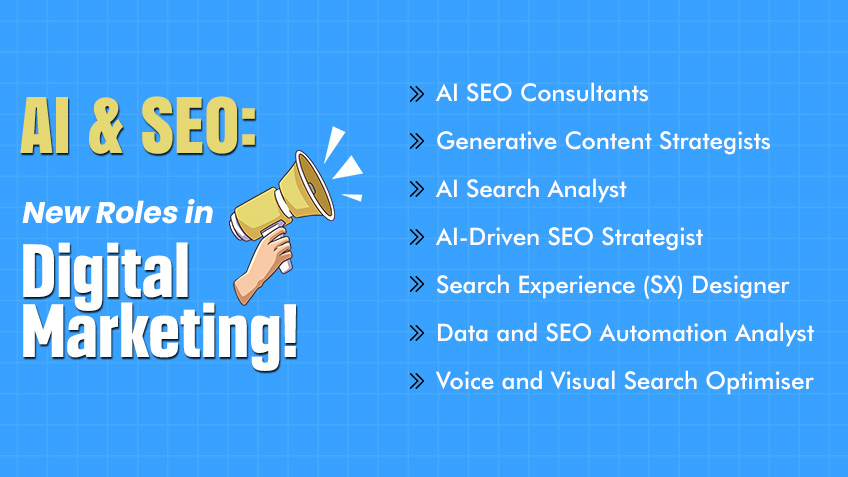
As AI has already begun to reshape the digital world, completely new SEO roles are emerging that blend creative, technical, and strategic expertise. The following are the key next-gen SEO careers:
These are the experts who connect traditional SEO tactics with cutting-edge AI SEO tools. AI-driven SEO consultants have in-depth knowledge of how search engines leverage machine learning. Their tasks involve integrating AI for quick keyword research, automated audits, and using predictive insights to keep SEO strategies ready for the future.
These professionals manage the creation of high-quality, relevant content using AI SEO writing tools such as Gemini and ChatGPT. The generative content strategist’s task goes beyond simple prompting. They ensure that the AI-generated content matches a specific brand voice, aligns with user intent, and adheres to ethical standards.
These experts study how AI-integrated search engines like Google’s search generative experience work, discover, and display relevant content. AI search analyst tasks involve examining new AI ranking signals and tracking how specific conversational search changes impact visibility in SERPs and affect organic traffic.
These experts build SEO campaigns that are entirely built on predictive analytics and machine learning data. AI-driven SEO strategist predicts algorithm changes, finds new search trends, and leverages automation to scale optimisation while keeping a human touch in branding and storytelling.
These experts optimise how people interact with the search results on top and the website. They focus more on a seamless user experience rather than just a ranking. Search experience designer blends SEO, UX (user experience) design, and AI insights to build intuitive website structures and make sure content aligns with user intent across all devices.
These experts apply data science to SEO. Data and SEO automation analyst use AI tools for SEO to quickly process huge amounts of data (user behaviour, rankings, etc.). They automate repetitive SEO tasks such as link checking and reporting, and build custom, intuitive dashboards to provide quick, intelligent, and more precise optimisation insights to the company.
These experts ensure that the content and products/services can be found when people use speech search (voice assistant) or look for them (image recognition). Voice and visual search optimiser refines content for conversational queries, schema markup, and visual metadata, ensuring the brand’s information is immediately discovered.
While the core objective of SEO, i.e., getting people the right information, will not change, the way it is being done will be significantly shaped by artificial intelligence. In the next five years, computers are expected to seamlessly handle the routine SEO tasks.
This indicates that you must become someone who strategises, designs the overall user experience, and reads the data. Your success will depend less on basic keywords but more on managing complex AI SEO tools to drive business growth. The following will be the key shifts in future SEO careers.
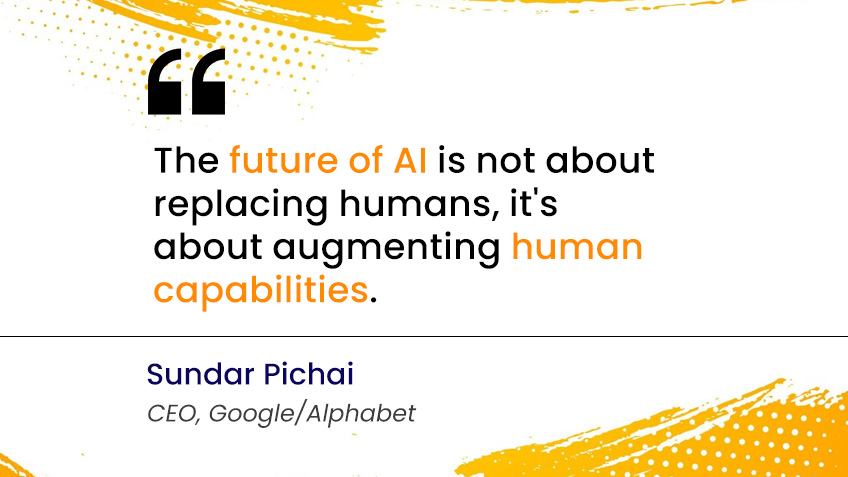
AI will automate basic tasks like keyword research, on-page optimisation, and technical audits. SEO professionals’ jobs will be more focused on prompt engineering, tool integration, and refining the quality of AI results.
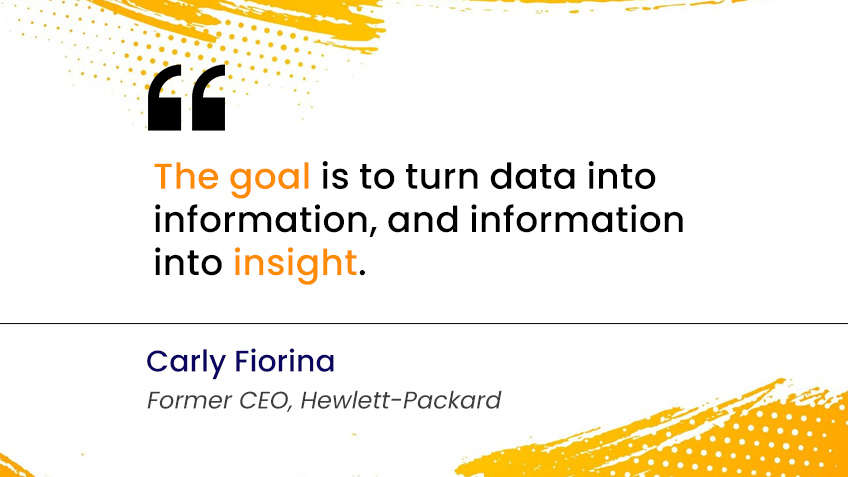
SEO will blend with big data analytics. SEO teams will use machine learning insights for advanced data to predict algorithm changes, identifying emerging trends and forecasting user behaviour before competitors, instead of just reporting on what has already happened.
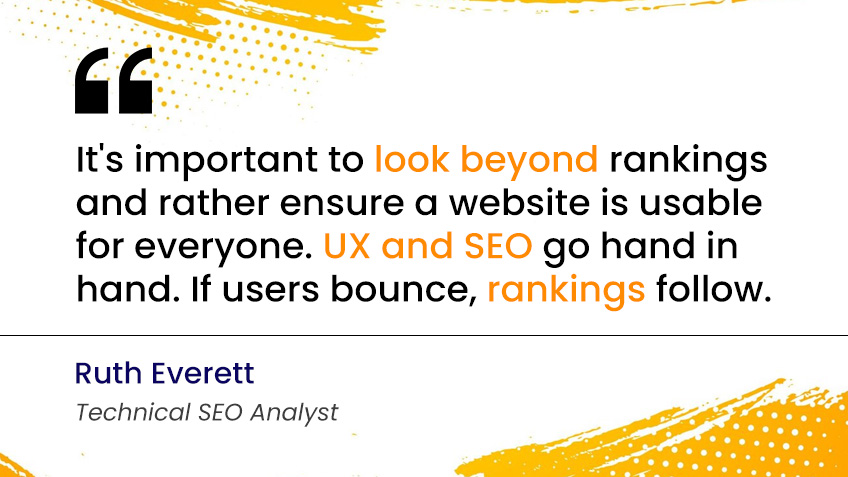
The key objective of SEO professionals will shift from simple optimising ranking in SERPs to refining the entire search experience. Professionals will require a blend of expertise in SEO and UX/UI design, and CRO (Conversion Rate Optimisation) for a smooth user experience and to satisfy their needs immediately.
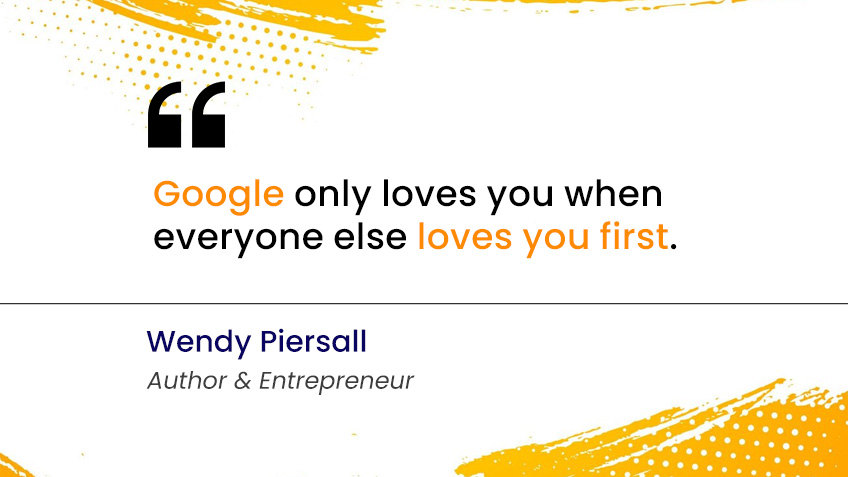
The most valued SEO professionals will be those who are capable of extracting and building a brand’s true credibility and authority (E-E-A-T). Basic content creation will be done by AI-powered SEO content writing tools, but original data, case studies, verifiable, and unique human insights will remain in more demand.
SEO is not just about text anymore. Professionals with specialised skills in multimodal SEO to get the brand found through voice commands and image searches. SEO professionals will ensure that the content is understandable and explorable across all search formats.
Junior SEO roles that focus purely on execution will be decreased, and the demand for senior roles with strong business acumen will be higher. The future SEO leaders will be capable of translating complex technical work into clear business growth and providing advice that drives profit.
The shift to ‘zero-click search’ indicates clearly that the digital marketing game has changed fundamentally.
Now, your job and career will not be defined by the number of tasks you complete but by the overall value and expertise that you bring to the table.
Don’t misunderstand AI. Many think that AI will cut several jobs; rather, this cutting-edge tool can be your assistant that will take you to the next level. The right approach is to master the best AI SEO tools and integrate them into your strategy.
However, to succeed, you need to start embracing the future of SEO and mastering roles like data analyst, strategist, and experience designer now.
Learn the right skills to accelerate your career and stay relevant in the future. Our digital marketing with AI course integrates all the essentials that propel your career forward in the artificial intelligence era.
Call us to book a free demo class today! 9836423755 | 6289562294 | 8910945693
What will be the future of SEO?
The future of SEO will be significantly dominated by Generative search features and artificial intelligence, which would deliver direct answers on the search result pages. The success will depend on optimising content or user intent and becoming a source that will be cited by AI at the top.
Can mastering SEO + AI now future-proof your career?
Absolutely! Professionals who master the blend of traditional SEO tactics with GEO (generative engine optimisation) and optimise content to appear in AI overviews and chatbots will be highly valued in the future.
Is SEO going to be replaced by AI?
No, AI will not replace SEO; rather, it will transform this domain. While AI SEO tools automate repetitive tasks, the need for professionals having expertise in ensuring content quality, extracting unique insights, adapting to algorithms, and defining business goals will remain essential.
Can SEO be done with AI?
Yes, AI has already become an integral part of SEO. This cutting-edge technology improves task efficiency, including content optimisation, keyword clustering, technical auditing, and predictive analytics, which frees up human professionals’ time to focus on more strategic work.
What is the future of AI in SEO?
The SEO has shifted from just getting link clicks, it has gone toward making content picked and summarised by AI on top. This new focus on generative engine optimisation will also lead to much better personalisation and forecasting in content strategy.
Can ChatGPT replace SEO?
No, ChatGPT will not replace SEO. It is an SEO writing AI tool that an SEO professional can leverage to create content or analyse the data, but ChatGPT cannot replace the ethical, strategic, and analytical oversight needed to manage SEO and drive business growth.
How is AI already influencing SEO today?
Today, search engines use AI to thoroughly understand what people are looking for and to analyse the quality of the content, which gives better results. Additionally, AI SEO tools have greatly helped content creators to speed up and sharpen the process of writing and optimising the final piece.
How is SEO evolving when AI becomes central?
SEO has evolved from a pure search engine optimisation to GEO or AEO (answer engine optimisation). The focus has significantly shifted from simple keyword research to building high trust (E-E-A-T) so that AI tools cite the content as the definitive answer at the top.
What changes are search engines making with AI that impact SEO?
Both Google and Bing are integrating generative AI directly into the SERP (search engine result pages) to provide summarised, quick answers to people’s questions. The AI overviews and Copilot/Chat integration have made it crucial to appear content within these instant answers.
Read more blogs:


 Login
Login